
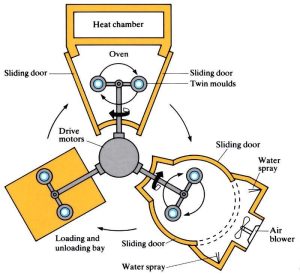
Metal Inserts for Rotomolded Assemblies
Metal inserts in rotomolded assemblies often determine whether a product succeeds or fails in the field. This article explains how engineered insert design prevents fatigue, improves load transfer, and ensures long-term structural reliability.

Quality Control in Metal Stamping
Quality control in metal stamping is a process-engineering discipline, not a final inspection step. This article explains how real-time monitoring, metrology, and data-driven control systems work together to prevent defects and ensure repeatable, high-performance parts.

Single Cavity vs Multi Cavity Mold Designs
Single-cavity and multi-cavity tooling represent fundamentally different manufacturing strategies, each optimized for specific risk, volume, and quality requirements. This article explains how the right cavity configuration directly impacts material behavior, tooling investment, and long-term production economics.

BRITTLE VS DUCTILE
Brittle and ductile material behavior determines how components respond to load, stress, and failure in manufacturing environments. This article connects material science fundamentals to real-world decisions in stamping, heat treatment, and tooling.

Hesitation Effect – Can It Occur in Insert Molding
The hesitation effect is a primary technical risk in insert molding, driven by rapid heat loss to metal inserts and abrupt changes in flow geometry. This article explains how hesitation develops, why insert molding is especially vulnerable, and how engineers prevent it through design, simulation, and process control.

Orbital Riveting Tools
Orbital riveting tools create strong, repeatable mechanical joints by forming rivets through controlled rolling motion instead of impact. This article explains the principles of orbital riveting, its advantages over traditional methods, and its role in precision manufacturing.
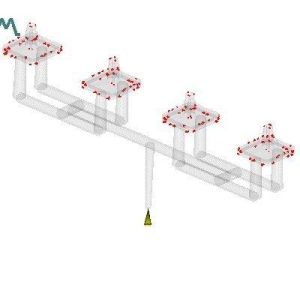
Mold Flow Analysis in Insert Molding
Mold flow analysis enables engineers to simulate how molten plastic flows, cools, and bonds around metal inserts before production begins. This predictive approach reduces defects, shortens development cycles, and ensures stronger, more reliable insert-molded parts.
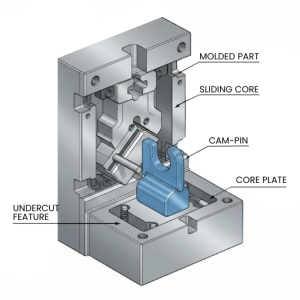
Molding Undercuts – Effects and Avoiding Them in Insert Molding
Undercuts can prevent proper part ejection and significantly complicate insert molding tools. This article explains common undercut types and practical design strategies to avoid costly tooling challenges.

PPAP in Manufacturing – What It Is and Why It Is Important
PPAP is the industry’s most trusted framework for proving a supplier can consistently build high-quality parts that meet every OEM specification. Ultimately, it validates the full manufacturing process, reduces risk, and builds confidence before mass production begins.
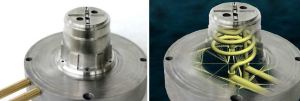
Conformal Cooling Inserts – Enhancing Part and Mold Quality
Conformal cooling inserts revolutionize thermal control in insert molding by enabling faster, more uniform cooling across complex geometries. This article explores their design, benefits, and applications in modern manufacturing.
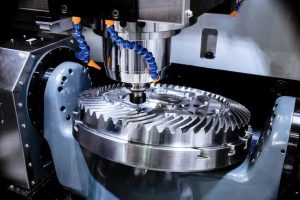
CNC Machining vs Injection Molding
CNC machining and injection molding serve distinct roles in modern manufacturing. This article compares both processes in terms of cost, precision, and scalability to help you choose the right fit for your production goals.
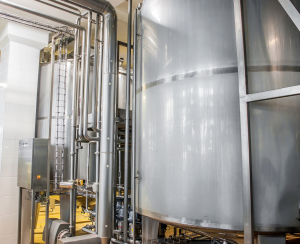
Metal Surface Finishing: Enhancing Appearance and Performance
Metal surface finishing enhances durability, wear resistance, and aesthetics while ensuring compliance with strict industry standards. This article reviews key techniques, challenges, and how ITD Precision delivers excellence in finishing solutions.