
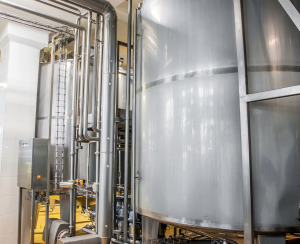
Metal Surface Finishing: Enhancing Appearance and Performance
Metal surface finishing enhances durability, wear resistance, and aesthetics while ensuring compliance with strict industry standards. This article reviews key techniques, challenges, and how ITD Precision delivers excellence in finishing solutions.
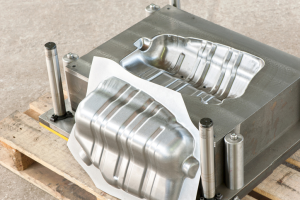
Core and Cavity in Insert Molding – How to Make the Right Choice
The core and cavity are the heart of insert molding, directly controlling geometry, strength, and performance. This article explores their design, challenges, and ITD Precision’s optimized solutions for reliable, high-volume manufacturing.
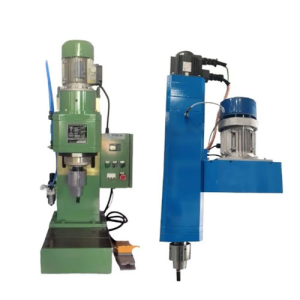
Radial vs Orbital Riveting: Differences and Making the Right Choice
This article compares radial and orbital riveting, two high-precision cold-forming techniques used in modern manufacturing. It explores their mechanisms, advantages, and ideal use cases to help engineers choose the right solution for durable and efficient assemblies.
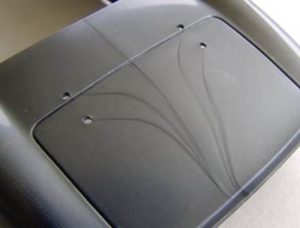
Flow Marks – What They Are and Prevention During Insert Molding
Flow marks are more than cosmetic flaws in insert molding; they often point to flow inconsistencies, poor gate design, or thermal imbalances. This article reviews what causes flow marks and outlines proven techniques to prevent them, such as insert preheating, optimized injection speeds, and surface treatments. Learn how ITD Precision eliminates flow marks through advanced tooling, conformal cooling, and real-time quality monitoring.

Types of E-Coating: Advantages, Applications, and Process Guide
E-Coating, short for electrophoretic coating, is a precise and environmentally friendly method for finishing metal components. This article explores how E-Coating works, its common types—like cathodic epoxy and anodic acrylic—and why manufacturers choose it for corrosion resistance, uniform coverage, and high-volume production. Discover how ITD Precision’s integrated manufacturing approach delivers tailored E-Coating solutions for every application.
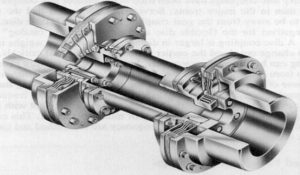
Disk Pack Couplings: High-Precision Torque Transmission
This article introduces disk pack couplings as essential components for high-precision torque transmission, especially in industries like aerospace, energy, and robotics. It covers how disk pack couplings accommodate misalignment while maintaining torsional rigidity, outlines their key design features, materials, and manufacturing processes, and explores emerging trends such as smart sensors and lightweight composites.
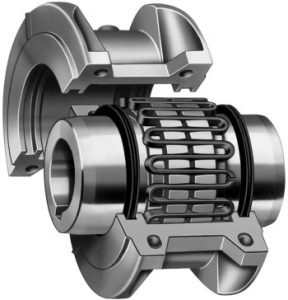
Flex Couplings – A Guide for Buyers and Manufacturers
Flex couplings play a critical role in connecting rotating equipment and managing misalignment. This article explores how they work, their types, design considerations, and why ITD Precision is your trusted partner for precision-manufactured flex couplings.
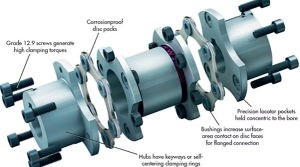
Disk Pack: Anatomy of a High-Performance Transmission Element
This article explores the anatomy, materials, design, performance features, and manufacturing considerations of disk packs. Thus, providing insights for OEMs, engineers, and manufacturers looking to source or develop high-reliability torque transmission components

Conformal Cooling vs Conventional Cooling During Insert Molding
Conformal and conventional cooling are key methods for managing heat in injection and insert molding processes. This article compares both approaches, examining their design, thermal efficiency, and impact on cycle time, part quality, and tooling complexity. Learn which cooling strategy offers the best performance for insert molding applications and how conformal cooling changes the game in modern mold design.

Types of Spot Welding: Methods, Benefits, and Applications
In this article, we explore the different types of spot welding techniques used across industries, including resistance spot welding, projection welding, seam welding, and capacitor discharge welding. We also examine the advantages and limitations of spot welding, offer practical selection tips, and highlight its most common applications. Whether you’re selecting a welding method for your facility or simply exploring options, this guide will help you make an informed decision.

Advantages of Austempering: A Game-Changer in Heat Treatment
Austempering is an advanced heat treatment process that enhances the mechanical properties of ferrous metals. This technique significantly improves strength, durability, and resistance to wear while minimizing distortion. This article explores the fundamentals of austempering and the various advantages it offers in the manufacture of metallic parts.

Grating Clips Selection: A Comprehensive Guide
Grating clips provide for quick and easy installation of gratings in both short term and long-term applications. There are several types available on the market, so selecting the right clips is necessary for optimal performance in your application. This article reviews factors that influence the selection of grating clips, as well as some installation considerations.