Introduction
Rotomolded components are widely used in tanks, enclosures, marine structures, material-handling systems, and specialty-vehicle applications. They offer seamless construction, corrosion resistance, and cost-effective large-part production. On their own, these polymer structures perform well in many environments. But most demanding industrial applications require mounting brackets, threaded connections, structural reinforcement points, load-bearing hinges, and sometimes anchor plates, in addition to these polymers. Failures often begin in the absence of these reinforcements. When embedded metal inserts are poorly designed, improperly stamped, or incorrectly engineered for thermal and mechanical compatibility, the result is predictable: cracking at insert interfaces, fastener pull-out, stress concentration, long-term fatigue, and costly warranty claims. The polymer shell rarely causes the failure; the integration does.
For OEM engineers and plant managers, the question is not whether to use metal inserts in rotomolded assemblies. It is whether those inserts are engineered to withstand real-world loads, temperature cycles, and long-term mechanical stress. That is where precision metal expertise becomes critical. This article reviews the importance of metal inserts in rotomolding, the factors that affect their use, and their applications.
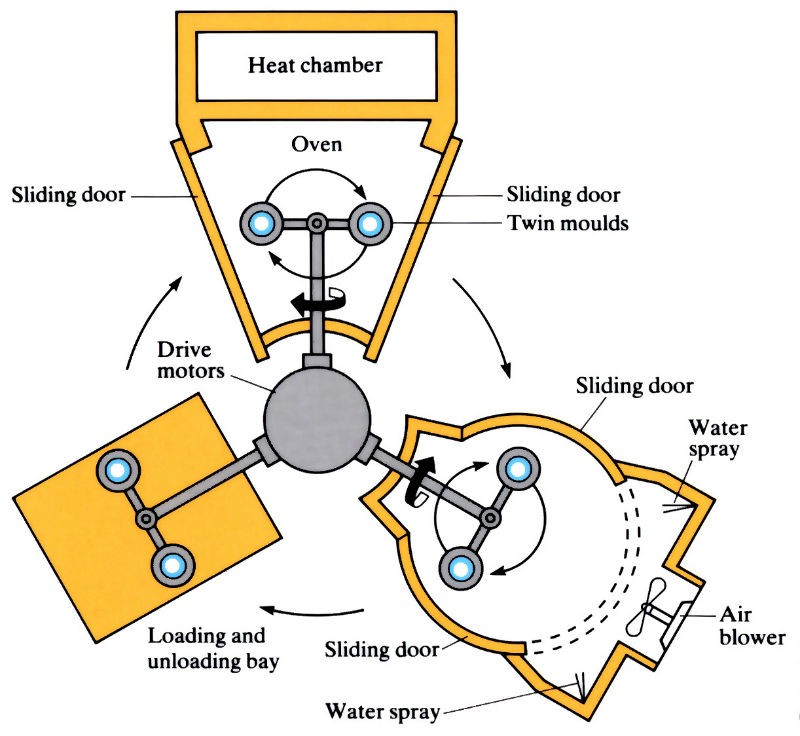
COURTESY: OPENLEARN
Why Rotomolded Assemblies Require Metal Inserts
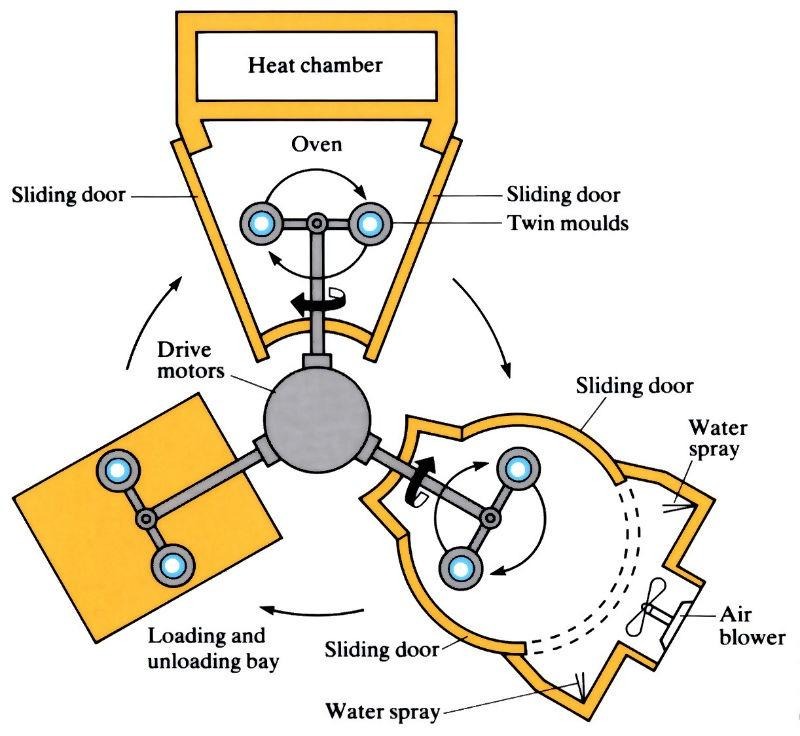
Rotomolding operates at atmospheric pressure, forming hollow, seamless parts through controlled heating and biaxial rotation. The process produces stress-free polymer structures with excellent impact resistance and chemical durability. Also, it is ideal for moderate production volumes and large geometries.
However, polymers and metals behave very differently under load.
- Polymers creep under sustained stress.
- Metals transfer load quickly and efficiently.
- Thermal expansion rates differ significantly.
- Mechanical fastening introduces localized stress concentrations.
When a stamped bracket or threaded insert is embedded into a rotomolded wall, it becomes a structural interface between two dissimilar materials. Without a proper interface design, cyclic loading amplifies stress at that boundary. Over time, the polymer can crack, loosen, or fatigue around the insert.
In oilfield containment systems, agricultural tanks, marine platforms, or industrial material handling bins, these failures are not minor inconveniences. Because they can shut down operations, compromise safety, or expose the environment. Preventing these outcomes requires efficient insert design, and not just placing metal into a mold.

The Engineering Variables That Determine Long-Term Performance of Metal Inserts
Differential Thermal Expansion
Polymers expand and contract at rates significantly higher than steel or aluminum. During heating and cooling cycles, both in manufacturing and in field environments, this mismatch generates internal stress at the metal-polymer interface. If the metal insert is overly rigid or lacks mechanical interlock features, thermal cycling can initiate micro-fractures in the surrounding polymer. Over time, these fractures propagate.
At ITD Precision, insert geometry is engineered with expansion compatibility in mind. In addition, the design of controlled edge profiles, anchoring features, and load-distribution surfaces aims to reduce stress concentration and accommodate material movement. The goal is to establish an attachment with long-term dimensional stability.
Mechanical Interlock Design of Metal Inserts
Smooth metal surfaces do not perform well inside molded polymer walls. Without mechanical engagement, inserts rely heavily on friction and bonding, which degrade under vibration and load.
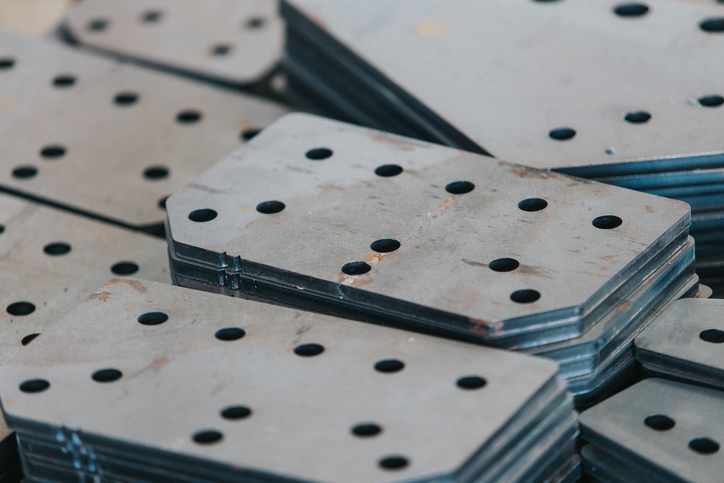
Precision stampings can be engineered with:
- Pierced retention holes.
- Embossed locking features.
- Under-cut geometries.
- Flanged load-distribution zones.
- Integrated reinforcement ribs.
These features allow molten polymer to flow through or around the insert during molding, creating a mechanical lock once cooled. The difference is measurable. Properly designed mechanical interlocks dramatically increase pull-out resistance and fatigue life. ITD’s in-house tool and die capabilities ensure that these features are consistent across production runs. That consistency protects OEM performance standards and field reliability.
Load Transfer and Structural Reinforcement
In many rotomolded assemblies, inserts are expected to carry structural load, supporting mounting brackets, hinges, lifting points, or frame connections. If the insert footprint is too small, loads concentrate in a narrow polymer region, leading to deformation and eventual cracking. Also, if the insert lacks adequate thickness or reinforcement, the metal itself can fatigue. Engineering the correct stamped profile, thickness, and reinforcement strategy distributes loads more effectively across the polymer wall. Progressive die stamping allows for controlled material flow and precise repeatability, ensuring each insert performs identically. For OEM engineers, this level of precision reduces variability in structural performance across product lines.
Corrosion Resistance in Harsh Environments
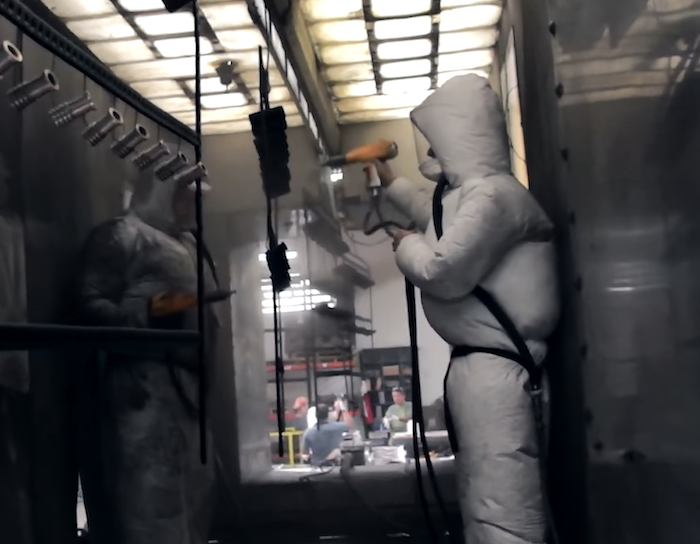
Rotomolded products are common in corrosive or outdoor environments, such as marine settings, wastewater systems, agricultural applications, and oilfield installations. If embedded metal components corrode, interfacial expansion can compromise the surrounding polymer. Rust-induced swelling is also a common and preventable failure mode. As a result, surface finishing is critical. Electro-coating (E-coat) provides uniform, anti-corrosion coverage, even in recessed features and pierced geometries. For applications requiring enhanced durability, protective coatings can significantly extend service life. Material selection and finishing strategy must align with the operating environment.
Precision and Repeatability in Production
Rotomolding itself allows for large-part flexibility, but insert misalignment or tolerance drift can compromise assembly integration downstream.
If the insert placement varies from part to part, OEM assembly lines experience:
- Fastener misalignment
- Increased installation time
- Rework or scrap
- Dimensional non-conformance
Precision metal stampings produced with controlled tooling reduce this risk. Tight dimensional control, verified through in-process inspection, ensures consistent integration with molded components.
Applications Where Metal Inserts Make the Difference
- Industrial Tanks and Fluid Containment: Threaded metal fittings and mounting brackets must withstand internal pressure fluctuations and environmental exposure. Properly engineered inserts prevent leakage pathways and fatigue cracking.
- Marine and Watercraft Components: Dock sections, buoys, and small vessel components require corrosion-resistant metal reinforcement for anchoring and mounting hardware. Long-term exposure to moisture demands integrated coating strategies.
- Agricultural and Oilfield Equipment: Rugged environments introduce vibration, impact, and temperature extremes. Metal inserts must absorb mechanical stress without transferring damaging loads to polymer walls.
- Material Handling Systems: Forklift contact, stacking loads, and repeated handling cycles create dynamic stress conditions. Reinforced mounting points extend product lifespan and reduce replacement frequency.
In each case, the polymer structure performs well, but only when metal integration supports the design intent.
Designing for Performance, Not Just Assembly
Many rotomolded assemblies are designed for manufacturability first. Whereas inserts are often treated as secondary elements added late in the design cycle. That approach creates risk. Successful integration requires collaboration between polymer processors and precision metal engineers early in development. Considerations such as:
- Insert geometry optimization
- Thermal compatibility
- Coating selection
- Load distribution modeling
- Tooling repeatability
must be addressed before production begins.
Partner with ITD Precision for Engineered Metal Integration
If your rotomolded assembly requires embedded brackets, threaded reinforcements, mounting plates, or structural stampings, the design of those metal components will determine long-term performance.
ITD Precision delivers:
- Engineered stampings optimized for mechanical interlock.
- Controlled dimensional precision for assembly alignment.
- Corrosion-resistant finishing for harsh environments.
- Tooling expertise that ensures repeatable production.
- Scalable manufacturing for OEM programs.
Contact us to discuss your next rotomolded assembly requiring precision metal integration. Let’s design components that protect your product in the field and strengthen your manufacturing performance from day one.