Conformal cooling inserts represent a fundamental advancement in mold tooling. Unlike conventional straight-line channels, these systems feature a cooling passage that mirrors the mold’s complex geometry. This article examines how conformal cooling enhances insert molding operations for superior results. For manufacturers, conformal cooling insert molding is not optional; it is a strategic advantage. Hence, this article offers key insights to guide smarter decisions in adopting this technology.
What Are Conformal Cooling Inserts?
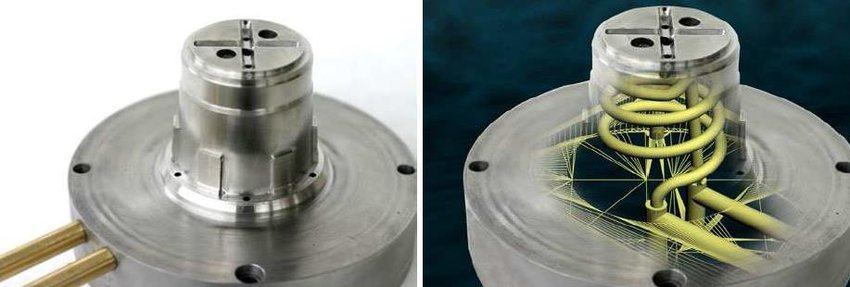
Conformal cooling inserts use precisely engineered internal channels that trace the exact three-dimensional contours of a molded part. Moreover, manufacturers create these channels through advanced metal additive manufacturing, building them layer by layer to maintain a consistent, minimal distance from the mold surface. This close alignment allows the system to extract heat directly and uniformly across the entire cavity, unlike traditional straight-drilled channels that struggle to reach complex geometries. In plastic insert molding, where metal components generate uneven thermal loads, conformal cooling provides a clear advantage. It stabilizes mold temperature, eliminates hot spots, and ensures consistent part quality. As a result, manufacturers achieve shorter cycle times, reduced warpage, and longer mold life. Conformal cooling has become an essential technology for efficient, high-precision molding operations.
Why Cooling Matters in Plastic Insert Molding
Cooling is the longest and most critical phase in the plastic molding cycle. It dictates the final solidification and dimensional stability of the part. Uneven cooling creates severe quality issues, such as part warpage and visible sink marks throughout the component. Dimensional instability also arises from inconsistent solidification rates. These defects are problematic in insert molding, because they cause the metal inserts to disrupt the uniform heat extraction significantly. Proper thermal management directly counteracts these challenges for manufacturers. It ensures even heat removal from the entire assembly, minimizing internal stresses and cycle time simultaneously. Effective cooling thereby boosts production rates and part quality, and completely transforms the overall economics of the insert molding operation.
Key Benefits of Conformal Cooling Inserts
Drastically Reduced Cycle Times
Conformal cooling inserts significantly shorten the molding cycle by maximizing heat extraction efficiency. The contoured channels maintain intimate contact with the entire mold surface, thus enabling rapid and uniform cooling of the polymer. This direct thermal management slashes the cooling phase duration, which is typically the longest segment of the injection cycle. By extracting heat efficiently, manufacturers can achieve faster mold open/close sequences, directly increasing production capacity and throughput without additional capital investment.
Extended Mold Lifespan and Reliability
Conformal cooling channels reduce thermal cycling stress on the mold tooling itself. Traditional cooling creates hot spots that cause localized expansion and contraction, leading to heat checking and premature failure. The uniform temperature distribution of conformal cooling minimizes these destructive thermal gradients, thus preserving the structural integrity of the mold steel. This translates to longer service life, reduced maintenance costs, and fewer unplanned production stoppages for mold repair or replacement.
Conformal Cooling Inserts Improve Energy Efficiency and Sustainability
The enhanced thermal transfer efficiency of conformal cooling reduces the energy required for process cooling equipment. Shorter cycle times also decrease overall electricity consumption per part produced. Additionally, the reduction in rejected parts due to cooling-related defects minimizes material waste. These combined effects reduce environmental impact, aligning with modern green manufacturing initiatives.
Design Considerations for Conformal Cooling Inserts
Coolant Flow and Pressure Drop
Designers must ensure smooth, turbulence-free coolant flow. Complex channel paths can significantly increase fluid resistance, resulting in unwanted pressure drops through the system. Computational fluid dynamics software often simulates this behaviour and helps optimize the channel layout for minimal pressure loss.
Distance from Mold Surface
The cooling channel must maintain a consistent standoff distance. This gap is typically a few millimeters from the cavity surface because staying too close can cause surface defects on the part. On the other hand, positioning too far reduces cooling efficiency significantly. Therefore, it is necessary to have a balance to ensure effective thermal management.
Additive Manufacturing Constraint
Design freedom is still constrained by manufacturing limitations. Support structure placement affects internal surface finish. Overhanging features may require special design considerations. Channel orientation influences the final part quality. These factors guide the optimal printing strategy for success.
Applications in Industry
Conformal Cooling Inserts in Automotive Manufacturing
Conformal cooling excels in producing complex automotive components. For example, sensor housings and connector bodies. These parts often have thick walls and metal inserts. The process ensures rapid, uniform cooling around these inserts.

Aerospace Components
Aerospace applications use conformal cooling for advanced composites. They also handle high-temperature engineering thermoplastics effectively. The process ensures consistency in structural components. It achieves this under demanding performance requirements. This includes extreme temperature resistance and structural integrity.
Medical Device Production
The medical industry relies on conformal cooling for precision. It is essential for surgical instrument handles and device housings. These components demand flawless surface finishes, and conformal cooling inserts ensure the desired end product is achieved.
Challenges and Limitations with Conformal Cooling Inserts
Design Complexity and Expertise
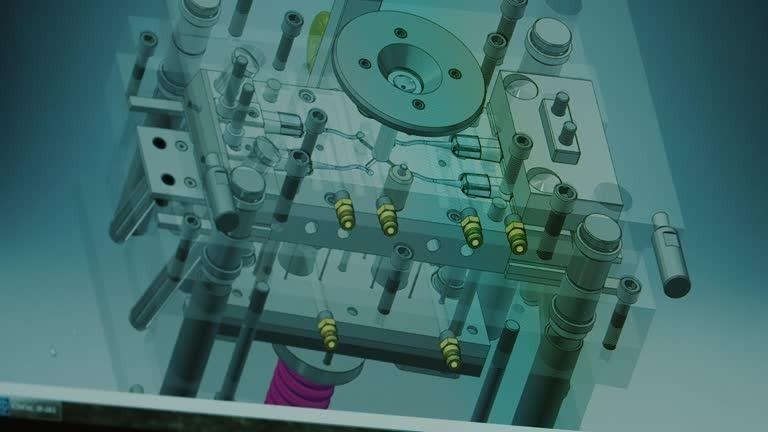
Creating optimal conformal channels requires specialized engineering knowledge because designers must master the principles of thermodynamics and fluid mechanics. This process involves the use of sophisticated simulation software for validation, like in the image below. Such expertise remains scarce in conventional mold shops, but at ITD Precision, it is a part of what we do every day.
Manufacturing Lead Time
Producing these inserts requires more time than traditional methods. The additive manufacturing process itself is slower. Additional post-processing steps further extend the timeline. These factors can impact schedules significantly.
Material Property Considerations
Additively manufactured metal exhibits different structural characteristics. Their properties differ from conventional mold steel alloys due to the application of specialized heat treatment processes. These factors ultimately affect the insert’s service life.
Conformal Cooling vs. Conventional Cooling
| Factors | Conformal Cooling | Conventional Cooling |
| Cooling Uniformity | Excellent, even heat extraction | Prone to hot and cold spots |
| Tooling Cost | High initial investment | Lower initial cost |
| Best Application | High-volume, complex geometries | Low-volume, simple parts |
| Lead Time | Longer for design and manufacturing | Shorter, standard machining |
Conformal cooling delivers the greatest ROI in high-volume production of complex components, where its superior thermal management directly translates into dramatically faster cycle times and significantly higher part quality. The substantial investment in the initiative is quickly recovered through increased production efficiency and the almost complete elimination of costly defects and rework. This makes it the most economical choice for manufacturers focused on long-term efficiency and consistency rather than initial cost.
Future Trends in Conformal Cooling
Advance Mold Materials
New metal alloys are being developed specifically for additive manufacturing. These materials offer superior thermal conductivity and durability. They will better withstand the pressure of high-volume production, thus extending the mold lifespan to a longer duration.
Hybrid Manufacturing Approaches
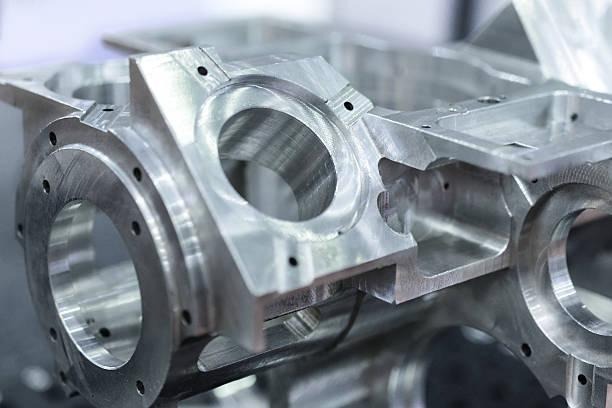
Future methods will combine additive and subtractive processes. For example, 3D printing will create the complex internal channels. Precision machining will then finish critical external surfaces. This hybrid approach guarantees optimal internal and external quality.
Integrated Sensor Technology
Future inserts will feature embedded micro-sensors. These will provide real-time data on temperature and pressure.
Conformal Cooling Inserts at ITD Precision
At ITD Precision, our mastery in tool & die and CNC machining is the foundation for engineering superior conformal cooling inserts. We leverage advanced in-house capabilities to design and manufacture inserts that deliver proven results: dramatically reduced cycle times, eliminated part warpage, and extended mold life. Partner with us to transform your production efficiency. Contact us today, and let us engineer thermal perfection into your next project.