
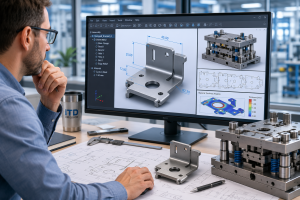
Design For Manufacturability in Precision Metal Stamping
Design for Manufacturability helps OEM engineers uncover costly stamping challenges before tooling begins. Early collaboration, strategic tolerancing, material optimization, and simulation can reduce rework while improving production consistency and launch readiness.

From Prototype to Production: How Local Manufacturing Accelerates Time-to-Market
Moving from prototype to production requires more than a successful design, it demands repeatable quality, responsive engineering, and coordinated manufacturing. Discover how local manufacturing can reduce delays, accelerate problem-solving, and help protect critical product launch timelines.

Why Low Piece Price In Manufacturing May Increase TCO
Low piece price may look like savings on a quote sheet, but poor quality can drive costly downtime, scrap, rework, expedited freight, and warranty risk. ITD Precision helps manufacturers reduce total cost of ownership through precision tooling, consistent quality, and reliable stamped components.

Why Inventory Is Killing Cashflow and How Domestic Supply Helps
How Excess Inventory Traps Working Capital and Weakens Manufacturing Agility Inventory looks like an asset on paper. In reality, it is one of the most

Nearshoring vs Offshoring: Cost, Risk, and Control Breakdown
As tariffs, freight volatility, and long lead times reshape global sourcing, OEMs are rethinking whether offshoring still delivers the lowest true cost. This article explores how nearshoring gives manufacturers greater control, faster response times, and stronger supply chain resilience.

When Cheap Parts Shut Down Production
Cheap parts often create hidden operational risks that lead to assembly failures, production downtime, equipment damage, and costly rework. Precision manufacturing reduces these risks through controlled materials, validated processes, and strict dimensional consistency.

Not All Grating Clips Are Equal
Not all grating clips perform the same, even when they look identical. Differences in material grade, heat treatment, dimensional tolerances, and corrosion protection directly impact clamp force retention, fatigue resistance, and long-term safety performance.
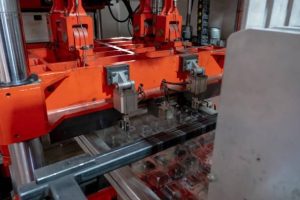
Thermoset vs Thermoplastic – Differences and Impact of Insert Molding
Thermoplastics and thermosets behave fundamentally differently in insert molding, especially at the metal interface where performance is defined. This article explains how material choice impacts bond strength, thermal stability, cycle time, and long-term reliability.
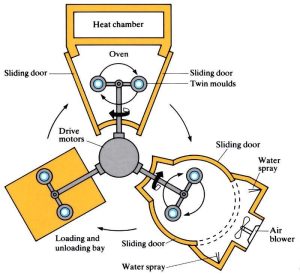
Metal Inserts for Rotomolded Assemblies
Metal inserts in rotomolded assemblies often determine whether a product succeeds or fails in the field. This article explains how engineered insert design prevents fatigue, improves load transfer, and ensures long-term structural reliability.

Quality Control in Metal Stamping
Quality control in metal stamping is a process-engineering discipline, not a final inspection step. This article explains how real-time monitoring, metrology, and data-driven control systems work together to prevent defects and ensure repeatable, high-performance parts.

Single Cavity vs Multi Cavity Mold Designs
Single-cavity and multi-cavity tooling represent fundamentally different manufacturing strategies, each optimized for specific risk, volume, and quality requirements. This article explains how the right cavity configuration directly impacts material behavior, tooling investment, and long-term production economics.

BRITTLE VS DUCTILE
Brittle and ductile material behavior determines how components respond to load, stress, and failure in manufacturing environments. This article connects material science fundamentals to real-world decisions in stamping, heat treatment, and tooling.