How Excess Inventory Traps Working Capital and Weakens Manufacturing Agility
Inventory looks like an asset on paper. In reality, it is one of the most aggressive cash drains in a manufacturing operation. Every pallet of raw material, every bin of work-in-process, and every shelf of finished goods represents money that has already left your business but has not yet returned. That cash cannot fund payroll, cannot support new tooling, and cannot respond to shifts in demand. It just sits. Most manufacturers accept this as the cost of doing business. Long offshore lead times, inconsistent quality, and shipping uncertainty force them to carry excess inventory just to stay operational. Over time, this becomes normal, but this should not be.
This article explains how excess inventory drains cash flow and how strategic partnerships with domestic suppliers will enable leaner operations and superior financial efficiency.

Understanding Cashflow and Inventory
Cash flow is the movement of money into and out of a business. It determines whether a company can meet its obligations and invest in growth. Profit may look strong on paper, but without cashflow, operations tighten quickly. Inventory is often treated as a current asset. From an operational standpoint, it behaves very differently. Inventory requires cash upfront and delays the return of that cash until the product sells. This creates a direct tradeoff. The more inventory you carry, the more cash you remove from circulation. Lean operations aim to shorten the time between paying for material and getting paid by the customer. That time gap is where cash gets trapped.
How Inventory Quietly Drains Cash
Inventory consumes cash in ways that go far beyond the purchase price. The first impact is immediate. Raw materials must be purchased before production begins. That cash is committed long before revenue is realized. As materials move into work-in-process, labor and overhead costs accumulate while still generating no return. Finished goods complete the cycle but often sit waiting for shipment or customer demand.
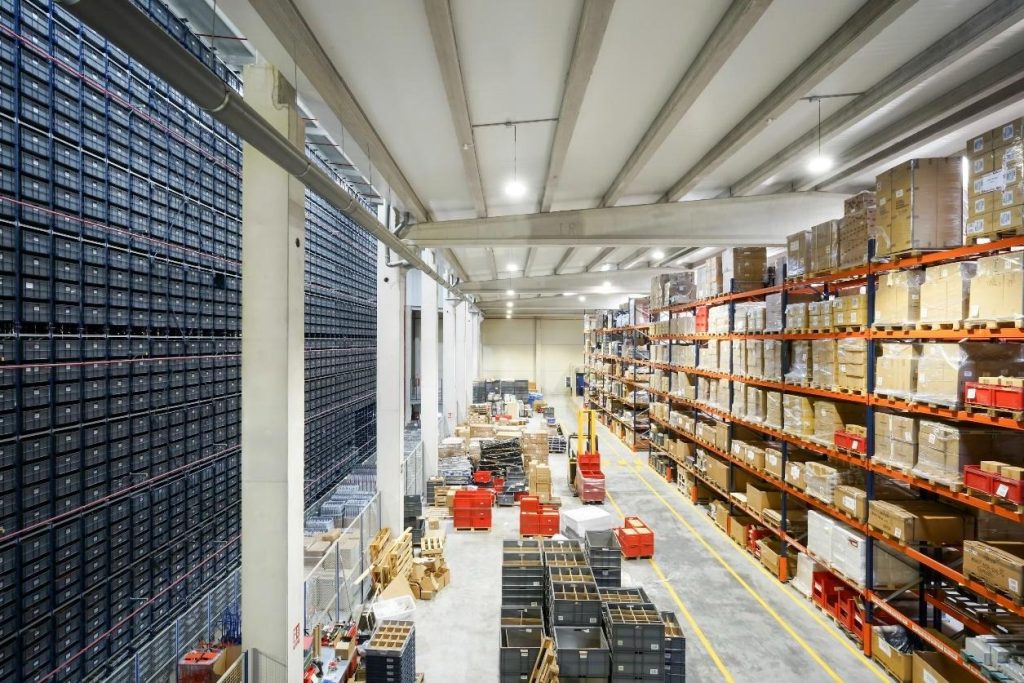
Then come the ongoing costs. Inventory requires space, handling, and protection. Warehousing, racking, equipment, utilities, insurance, and taxes all add continuous financial pressure. Many manufacturers underestimate these costs, but industry benchmarks often place total inventory carrying costs between 20 and 30% annually. The most damaging factor is obsolescence. Engineering changes, shifting customer requirements, or forecast errors can turn usable inventory into scrap overnight. At that point, the cash is gone for good. In some cases, disposal adds even more cost. Inventory does not just sit. It accumulates risk while tying up capital.
Offshore Inventory Trap
Offshore sourcing creates conditions that almost guarantee excess inventory. A typical offshore cycle can stretch beyond sixteen weeks due to a combination of production, ocean freight, customs clearance, and inland logistics. That means manufacturers must commit cash months before they see any return. Forecasting becomes unavoidable under these conditions. The problem is that forecasts are rarely accurate. Demand shifts, customer priorities change, and real-world conditions do not follow projections.
To compensate, companies build safety stock. In many cases, that means carrying several weeks or even months of additional inventory. This stock is fully paid for and generates no value until it is used. When demand exceeds expectations, expedited freight becomes the fallback. Air shipping can deliver parts quickly, but at a cost that often exceeds the value of the components themselves. Meanwhile, the original safety stock remains in place, continuing to tie up cash. The result is a cycle that is difficult to break. Long lead times drive higher inventory. Higher inventory drains cash. Limited cash reduces flexibility. Reduced flexibility leads to more conservative ordering and even higher inventory levels.
Quality Issues Multiply the Problem
Inconsistent quality introduces another layer of inventory pressure. When incoming parts cannot be trusted, manufacturers are forced to inspect every shipment. This creates queues, delays production flow, and builds additional work-in-process inventory. Time is lost, and cash remains tied up longer.
Rejection rates also drive over-ordering. If a supplier has a known defect rate, companies compensate by ordering more than they need. That extra inventory sits as a buffer against failure. The impact does not stop there. A single defective batch can halt production. When that happens, there is reliance on safety stock to keep the line moving. Once depleted, it must be replenished, often with the same long lead times that caused the problem in the first place. This creates a compounding effect where uncertainty drives more inventory, and more inventory ties up more cash.
How Domestic Suppliers Enable Cashflow Improvement
Reliable domestic suppliers address the root causes of excess inventory rather than just the symptoms. Partnering with them comes with several benefits, as highlighted in the following sections.
Lead Time Compression and Cash Release
Lead time is one of the most powerful levers in manufacturing. When suppliers deliver in two to three weeks instead of several months, the need for large safety stock disappears. Orders can be placed closer to actual demand, reducing forecast risk and minimizing excess material. This compresses the cash conversion cycle. Money leaves the business later and returns sooner. The result is more liquidity without increasing sales. Manufacturers that reduce lead times often find they can reinvest freed cash into growth initiatives, equipment upgrades, or process improvements that further strengthen their position.
Quality Consistency Eliminates Hidden Buffers
High-quality, repeatable parts remove uncertainty from the system. When incoming components meet specifications consistently, inspection becomes minimal and predictable. Production flows without interruption. There is no need to carry extra inventory to protect against defects. This reduces both direct and indirect costs. Less inspection means lower labor expense. Fewer defects mean less rework and scrap. Most importantly, less uncertainty means less cash tied up in precautionary inventory.
Responsiveness Drives Operational Flexibility
Market demand does not wait for long supply chains. Domestic suppliers can adjust production schedules quickly, allowing manufacturers to respond to actual demand rather than relying on outdated forecasts. Implementation of engineering changes can be in days instead of months, reducing the risk of obsolete inventory. This responsiveness reduces the need for emergency measures. Standard ground shipping replaces expensive air freight. Production stays aligned with actual customer needs. Flexibility becomes a competitive advantage rather than a constant challenge.
Partner With ITD Precision
ITD Precision helps manufacturers break the cycle of excess inventory and restricted cashflow. With domestic production, typical lead times of two to three weeks, and IATF-certified quality systems, ITD delivers consistent components that reduce uncertainty across the supply chain. Customers gain the ability to operate with less safety stock while maintaining confidence in every shipment. The impact goes beyond operations. Manufacturers working with us can reduce inventory exposure, shorten their cash conversion cycle, and unlock working capital previously tied to material.
We also support design for manufacturability, helping customers lower production costs and improve efficiency at the part level. This collaboration further reduces waste and accelerates time to revenue. If your operation is carrying excess inventory, the cost is already showing up in your cashflow, whether it is visible or not. Reducing that burden requires more than internal adjustments. It requires a supply partner that delivers speed, consistency, and reliability every time. Contact us today to evaluate your current supply chain and identify where inventory is locking up your cash. The opportunity to improve cashflow, reduce risk, and operate leaner is closer than you think.