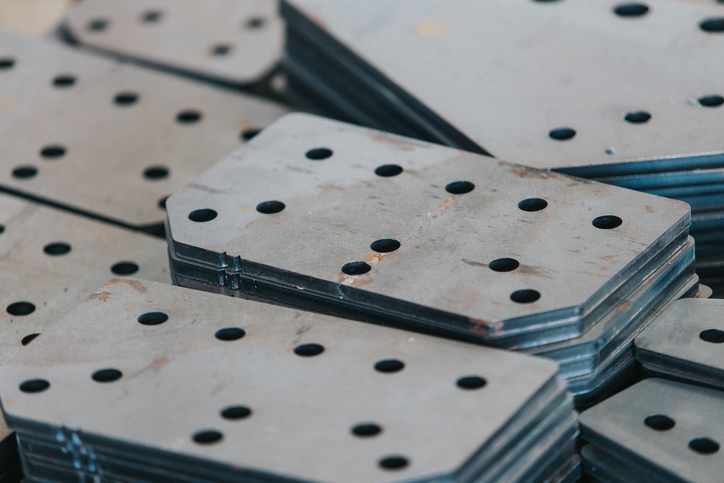
The Cheapest Part Often Becomes the Most Expensive Problem
A production line stops for one hour because a stamped bracket fails dimensional inspection. Operators stand idle. Shipments fall behind. Expedite freight gets approved. Customers start asking questions. Yet procurement reports still show “cost savings” because the supplier offered the lowest piece price. This is one of the most dangerous financial blind spots in manufacturing. Piece price in manufacturing is easy to compare, but it rarely reflects the true cost of a component. Low-cost suppliers often create hidden operational expenses through poor quality, inconsistent delivery, scrap, rework, downtime, warranty claims, and inventory instability. For OEMs, plant managers, and procurement leaders, the real metric is not piece price. The real metric is total cost of ownership (TCO).

What Is Piece Price In Manufacturing?
Piece price is the unit cost paid for an individual component or manufactured part. It typically includes:
- Raw material
- Labor
- Tooling overhead
- Manufacturing costs
- Supplier margin
Piece pricing is dangerous because it creates a false economy. Savings are visible and immediate, while losses are hidden and delayed. A buyer who saves ten cents per part appears successful, but the production team that spends hours reworking or halting lines due to poor quality bears the real cost. The organization celebrates the savings while bleeding value elsewhere.
The most dangerous feature of piece pricing is that it rewards suppliers who cut corners on quality. A supplier who uses lower-grade material, worn tooling, or minimal inspection can undercut competitors. The low piece price wins the order. The customer inherits the risk. Dimensional variation, inconsistent material properties, and premature failures become the customer’s problem. The supplier who invested in quality loses business to the one who did not. These dynamics drive the entire supply chain toward mediocrity.
Hidden Costs That Low Piece Price Ignores
Incoming Inspection
Cheap parts require verification. Every dimension must be checked because quality is uncertain. Inspection labor, equipment, and floor space cost money. A supplier with robust quality ships parts that do not require inspection. The piece price does not reflect this difference.

Rework and Scrap
Nonconforming parts cannot be assembled. Some are reworkable, whereas others are scrap. Labor, material, and overhead are consumed twice. The low piece price did not account for this waste.
Production Downtime
Assembly lines stop when parts misfeed or fail. Every idle minute incurs labor costs and lost output. Restarting erodes production momentum. These losses accumulate rapidly and never appear on the supplier invoice.
Expedite Freight
Demand fluctuations require emergency orders. Cheap-part suppliers with long lead times cannot respond. Air freight cost exceeds the component value. The low piece price did not prevent this expense.
Warranty and Field Failure
Parts that survive assembly may fail in service. Field failure triggers warranty claims, service visits, and replacement parts. Brand reputation suffers as future business erodes. The original piece price savings are microscopic relative to these losses.
What to Measure in Manufacturing Instead of Piece Price
- First-Pass Yield: Percentage of parts meeting specification without rework. Higher yield means lower handling cost.
- On-Time Delivery Percentage: Reliable delivery reduces safety stock and expedites freight. Consistency matters more than the lowest price.
- Quality Rejection Rate: Parts rejected at incoming or during in-process checks. Each rejection adds cost. Zero rejection is the only acceptable target.
- Lead Time Variability: Consistent lead times enable lean inventory. Variable lead times require safety stock. Predictability has value.
- Responsiveness to Changes: Suppliers who adjust schedules quickly support demand fluctuations. This agility reduces inventory and costs.
Total Cost of Ownership: The Correct Metric
Total cost of ownership (TCO) captures all expenses from purchase through disposal. It includes piece price, freight, inventory carrying cost, inspection, rework, downtime, warranty, and replacement. TCO reveals which supplier truly costs less.
Calculating TCO requires data that many organizations do not track. Downtime cost per minute is often unknown. Rework labor is not allocated to specific suppliers. Warranty claims are not traced to component sources. Building this capability is essential. Without TCO data, piece price dominates the decision by default.
A simple example illustrates the gaps in piece price. Consider two suppliers, Supplier A and Supplier B. Supplier A charges $1.00 per part (piece price), while Supplier B charges $1.10. Supplier A has 5% rejects, which causes 2 hours of downtime monthly. On the other hand, supplier B has no rejects and no downtime. Supplier A costs more, and the piece price obscures this.
How ITD Precision Delivers Lower Total Cost
ITD Precision does not compete on the lowest piece price. We compete on the lowest total cost. Our stampings cost more upfront because we invest in material certification, precision tooling, and rigorous process control. But our customers pay less overall because parts work the first time, every time.
Our quality systems achieve consistent dimensional accuracy. Incoming inspection is verification, not screening. No rejects reach assembly lines, no production downtime from nonconforming parts, no emergency freight for replacements, and no warranty claims from field failures.

Our lead times are measured in weeks, not months. Responsive production adapts to changes in demand without air freight. Shorter supply chains reduce inventory carrying costs. Engineering collaboration prevents problems before tooling is cut.
A strategy that considers only piece price is like comparing apples to oranges. Total cost compares the true value of a product or material. ITD Precision customers consistently find that our piece price delivers lower total cost. The proof is in uninterrupted production lines and reliable field performance. Contact ITD Precision to discuss your stamping requirements. Let us show you how a higher piece price delivers lower total cost and more reliable production.
FAQ: Piece Price and Total Cost In Manufacturing
Low piece price often hides larger operational expenses such as downtime, scrap, rework, warranty claims, and production delays.
Total cost of ownership measures all direct and indirect costs associated with a component throughout its lifecycle, including production impact and field performance.
Poor supplier quality increases scrap, rework, downtime, inspection labor, warranty claims, and inventory instability. These hidden costs frequently exceed the original component savings.
Reliable suppliers improve production uptime, delivery consistency, inventory efficiency, product quality, and operational predictability.
ITD Precision reduces total manufacturing cost through precision tooling, dimensional consistency, responsive production, process control, and reliable manufacturing quality.