Thermoset vs Thermoplastic in Insert Molding
Insert molding is not just about plastics. It is a long-term performance decision that directly affects bond integrity, dimensional stability, production efficiency, and field reliability. When thermoplastic or thermoset materials are paired with precision-stamped metal inserts, the polymer selection determines how that component performs under torque, heat, vibration, and chemical exposure. A poor choice can result in insert pullout, stress cracking, creep deformation, or premature part failure. For OEM engineers and plant managers, those failures translate into warranty claims, downtime, and costly rework. This article reviews the differences between thermoset vs thermoplastic polymers when designing durable insert-molded components for automotive, appliance, HVAC, construction, and industrial applications.
Understanding Thermoplastics in Insert Molding Applications
Thermoplastics are polymers that soften when heated and solidify when cooled. This process is reversible, allowing the material to be melted and reformed multiple times without permanent chemical change. The molecular structure consists of long polymer chains held together by secondary intermolecular forces rather than permanent cross-links.
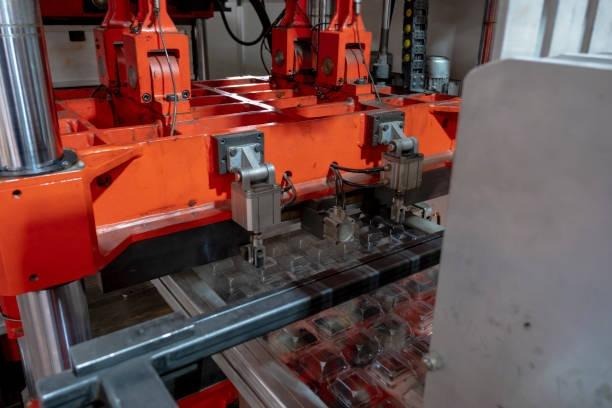
In insert molding, this reversibility drives both processing efficiency and mechanical performance. When heated above their melting point or glass transition temperature, thermoplastics flow as a viscous melt. During injection, the material encapsulates the stamped metal insert and fills the mold cavity under pressure. As the part cools, the polymer contracts around the insert, creating mechanical retention. This shrinkage is not a minor detail; it is a primary factor in the insert bond strength.
Key Characteristics of Thermoplastics
Thermoplastics typically offer:
- Good impact resistance and ductility.
- Shorter cycle times compared to thermosets.
- Recyclability and reprocessability.
- Strong mechanical interlock with textured metal inserts.
However, they also exhibit creep under sustained load and soften at elevated temperatures. Continuous service temperature is limited by the material’s thermal properties. In applications with high heat exposure or constant mechanical stress, this limitation must be carefully evaluated.
Common Thermoplastics Used in Insert Molding
- Nylon: Provides excellent toughness and wear resistance for automotive and industrial components.

- PEEK (Polyetheretherketone): Offers high-temperature stability and chemical resistance for medical and aerospace applications.
- Polypropylene: Provides chemical resistance and electrical insulation for appliance and automotive parts.
- ABS (Acrylonitrile Butadiene Styrene): Delivers good impact strength and surface finish for consumer products.
Thermoplastic Behavior During Insert Molding
In thermoplastic insert molding, bond integrity relies primarily on mechanical interlock. As the material cools, it shrinks and compresses around knurled, grooved, or undercut insert surfaces. Proper insert design significantly enhances retention strength and impacts cooling time, which dominates the production cycle. Thicker parts require longer cooling phases to achieve dimensional stability, and without proper cooling control, residual stresses can develop. These stresses may lead to part distortion or cracking over time.
For high-volume production environments, thermoplastics often provide an economic advantage due to faster cycle times. When paired with precision-stamped inserts produced in-house, thermoplastic insert molding can deliver repeatable, scalable performance.
Understanding Thermosets in Insert Molding
Thermosetting polymers behave very differently from thermoplastics. Once heated, they undergo an irreversible chemical reaction called cross-linking, forming a three-dimensional molecular network that permanently hardens the material.
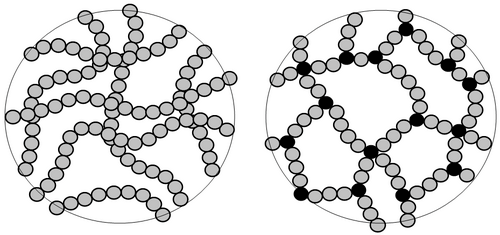
Unlike thermoplastics, thermosets cannot be remelted or reshaped. Additional heat will degrade the material rather than soften it. Although this chemical structure makes thermosets less flexible, it provides significant advantages in high-temperature and high-load environments.
Key Characteristics of Thermosets
Thermosets typically offer:
- Excellent dimensional stability.
- High resistance to creep under sustained load.
- Strong chemical and solvent resistance.
- Superior performance at elevated service temperatures.
Because of their cross-linked structure, thermosets maintain mechanical properties where many thermoplastics would begin to soften. However, they are generally more brittle and less impact-resistant.
In insert molding applications where heat exposure or sustained mechanical load is critical, thermosets often outperform thermoplastics.
Behavior of Thermosets During Insert Molding
Thermosets flow as low-viscosity liquids before curing begins. Heat from the mold initiates cross-linking, increasing viscosity until the material solidifies. The curing reaction is exothermic and must be carefully controlled. Chemical bonding can occur between the thermoset and metal insert surface, providing adhesion beyond mechanical interlock. Cure time dominates the cycle and depends on material chemistry and part thickness.
Critical Differences Between Thermoplastic vs Thermoset for OEM Applications
Understanding these differences between thermoplastics and thermosets ensures material selection aligns with part performance expectations.
Processing Requirements of Thermoset vs Thermoplastic
Thermoplastics require heating above the melt temperature, injection into the cavity, and cooling for solidification. In contrast, thermosets require heating to initiate cross-linking, maintaining temperature until cure completes, and part ejection while hot.
Bond Integrity With Metal Inserts
Thermoplastic achieves bond integrity primarily through mechanical interlock. Shrinkage during cooling compresses the polymer around knurled, grooved, or undercut insert surfaces. Thermosets can achieve both mechanical interlock and chemical adhesion to metal surfaces.
Chemical Resistance of Thermoset vs Thermoplastic
Thermoplastics vary widely in chemical resistance. Some dissolve in solvents while others resist attack. Thermosets typically exhibit excellent resistance to solvents and chemicals due to their cross-linked structure (they swell or degrade with time under aggressive conditions).
Shrinkage and Residual Stress
Thermoplastics exhibit significant shrinkage during cooling, creating compressive stress around inserts. This stress can enhance retention but may also cause part distortion or insert movement. Thermosets, on the other hand, exhibit minimal shrinkage after cross-linking, with residual stress developing primarily during cool-down from cure temperature.
Performance of Thermoplastic vs Thermoset Under Load
Thermosets resist creep, maintain dimensional stability, and generally retain mechanical properties at higher service temperatures. In contrast, thermoplastics exhibit creep under sustained load and retain mechanical properties at lower service temperatures.
Application Suitability
Thermoplastics excel in automotive interior components, consumer products, and medical devices requiring toughness. In contrast, thermoset excel in high-temperature electrical components, under-hood automotive parts, and applications requiring dimensional stability under sustained load.
Selecting the Right Material Between Thermoset vs Thermoplastic for Your Application
The following should be considered when selecting between thermoplastic and thermoset polymers for a product.
Design Requirement Analysis
Engineers must evaluate mechanical loads, both static and dynamic, expected during service. Thermal exposure and chemical environment should also be quantified and accounted for.
Production Volume Consideration
Thermoplastic cycles are generally shorter, favoring high-volume production where cycle time dominates economics. The thermoset cycle may be longer, but it can be justified by performance requirements.
Regulatory Compliance
Medical applications require biocompatibility and sterilization resistance. Food contact application demands FDA or EU compliance. Electrical applications specify flame retardancy and tracking resistance. Material selection must align with applicable regulatory standards.
Testing and Validation
- Prototype tooling allows for material evaluation under production-representative conditions.
- Mechanical testing validates bond integrity and part performance
- Thermal cycling confirms dimensional stability across the temperature range.
Why OEMs Partner with ITD Precision for Insert Molding
Selecting between thermoplastic and thermosetting materials requires deep polymer science knowledge and practical processing experience. ITD Precision brings over seven decades of material science mastery to every insert molding project. Our engineers evaluate application requirements, production volumes, and performance specifications to specify the optimal polymer chemistry. We understand how each material behaves during flow, cure, and cooling around metal inserts. This expertise ensures bond integrity, dimensional stability, and long-term reliability for your components. Partner with ITD Precision today to translate your complex material decisions into production-ready solutions.