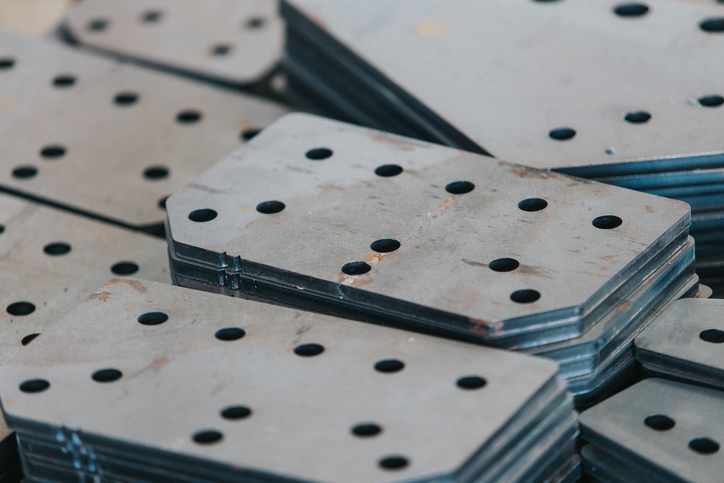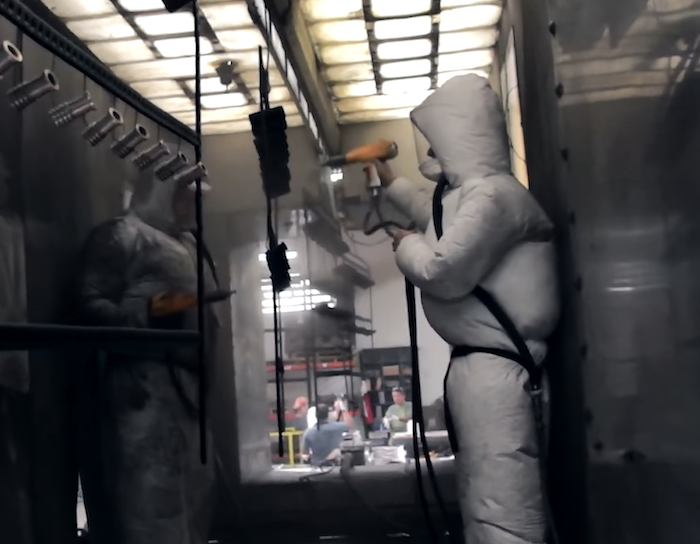
Grating clips can be considered as the unsung critical components. They are small fasteners that secure industrial flooring panels to their supporting structures. Yet they perform a critical function for worker safety and structural integrity. A single clip failure can lead to loose panels, trip hazards, or catastrophic collapse under load. Yet, these components are often treated as commoditized afterthoughts in project specifications. This article will demonstrate why grating clips are not equal and how precision engineering directly impacts their reliability.
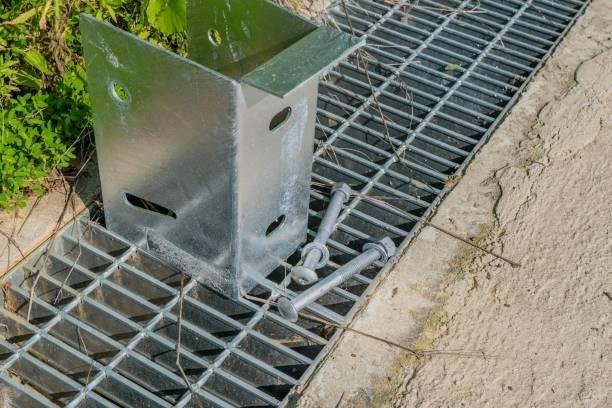
Definition of Grating Clip
A grating clip is a mechanical fastener designed to clamp a grating panel to an underlying support beam. Its primary function is to resist vertical lift-off and lateral shifting forces. The clip transfers these dynamic loads from the grating to the substructure through friction and mechanical interference. This load path must remain stable under foot traffic, machinery vibration, and thermal expansion. Any deviation in clip geometry or material properties compromises this load transfer.
Grating Clips Failure
Standard grating clips often fail because of three main issues: insufficient clamp force, stress risers, and limited corrosion protection. Using thin-gauge materials or having loose manufacturing tolerances lowers the clip’s spring rate, leading to a loss of clamping pressure. Sharp corners in the clip design create stress risers where cracks can start during vibration. In addition, low-cost surface coatings wear off quickly, exposing the base metal to rust and galvanic attack. Each of these issues directly results in premature loosening or fracture.
Why “They Look the Same” Is Misleading
Two grating clips may appear identical, but are not equal as they perform completely differently in the field. The difference comes down to engineering control, not appearance. Critical performance variations come from:
- Material grade
- Heat treatment process
- Dimensional accuracy
- Surface protection
These factors determine whether a clip:
- Maintains clamp force over time
- Resists fatigue and vibration
- Withstands harsh environments
What Engineers Should Look For in Grating Clips
To prevent failures and long-term maintenance issues, engineers must evaluate more than just fit and price. The sections below highlight key parameters to consider when selecting grating clips.
1. Clamp Force Retention
Clips must maintain consistent pressure under vibration and load. Loss of clamp force leads directly to panel movement and safety risks.
2. Verified Material Strength
Unspecified or inconsistent steel introduces variability in performance. High-quality clips use controlled material grades to ensure predictable strength and elasticity.
3. Controlled Heat Treatment
Proper heat treatment creates a uniform microstructure that delivers:
- High yield strength
- Consistent spring rate
- Long fatigue life
Without it, clips deform or fail prematurely under repeated loading.
4. Corrosion Resistance Matched to Environment
Surface protection is critical in outdoor, humid, or corrosive environments.
Poor coatings lead to:
- Rust expansion
- Coating delamination
- Accelerated material degradation
If this occurs, it leads to shorter service life and higher replacement frequency.
5. Tight Dimensional Tolerances
Precision matters because variations in parameters such as leg height, hole placement, and contact geometry can reduce load distribution and compromise fastening performance.
Difference Between Grating Clips
It is a mechanical fact that not all grating clips are equal. Grating clips vary significantly in material grade (base material), dimensional accuracy, heat treatment, and surface finish. These Variations directly affect clamp force retention, corrosion resistance, and fatigue life. Two clips that look identical to the naked eye can perform very differently under load. Even though these differences are not visible, they measure distinct properties that characterize the individual clip. The property that makes them different are as follows:
Heat Treatment and Microstructure
Heat treatment alters the metal’s internal grain structure to achieve specific mechanical properties. The process involves heating the part to a critical temperature, holding it, then cooling it at a controlled rate. A properly heat-treated clip will develop a uniform martensitic microstructure. This structure provides high yield strength, consistent spring rate, and excellent fatigue resistance.

Base Material
The base material grade defines the clip’s fundamental mechanical behavior. Unspecified or recycled steel introduces unpredictable variation in yield strength, ultimate tensile strength, and elongation. A clip made from weak material will deform plastically under normal loading and clamping loads. Precision clips specify exact material grades with documented properties, to ensure predictable elastic behavior within the design load range.
Surface Finish
Surface finish is a physical property of the clip that affects both corrosion resistance and friction behavior. Corrosion begins when moisture penetrates the coating and contacts the base metal. The resulting rust expands, lifting the coating and accelerating further corrosion. A surface finish also affects the coefficient of friction between the clip, grating, and fastener.
Dimension Tolerance
Dimensional tolerance is the allowable deviation from the specified measurement. It helps determine how force transfers from the fasteners to the grating and support beam. Critical dimensions include leg height, base flatness, hole position, and contact surface angles. Precision tolerance must be ensured for proper load distribution across the entire contact surface.
Spring Rate and Elastic Behavior
Spring rate is the relationship between applied force and deflection, measured in pounds per inch or newtons per millimeter. This property determines how much clamping force the clip provides for a given deflection. The spring rate depends on material modulus, cross-sectional geometry, and heat treatment. Insufficient spring rate will not generate enough clamp force to resist vibration loosening, and excessive spring rate will overstress the fastener or grating.
Determination of the Difference in Grating Clips
The determination that not all grating clips are equal is based on measurable physical and mechanical differences. These differences can be verified through inspection, testing, and performance data. The following are the objectives and criteria used to distinguish between grating clips of varying quality.
Dimensional Measurement
A calibrated measuring tool, such as a caliper or micrometer, can quantify critical dimensions.
Hardness Testing
A Rockwell or Vickers hardness test measures the clip’s resistance to indentation.
Salt Spray Testing
A controlled salt spray chamber exposes clips to a corrosive fog for a specified duration.
Coating Thickness Measurement
A magnetic thickness gauge measures the zinc or other coating layer in microns.
Installation Torque Test
Installing the grating clip with a calibrated torque wrench reveals how the fastener behaves.
FAQs on Grating Clips and Performance Reliability
1. Why are grating clips important in industrial applications?
Grating clips secure flooring panels to support structures, preventing movement, vibration, loosening, and panel lift-off. Properly engineered clips are essential for worker safety, structural stability, and long-term system reliability.
2. Are all grating clips the same?
No. Not all grating clips are equal as they can vary significantly in material grade, heat treatment, dimensional accuracy, coating quality, and spring performance. These differences directly affect clamp force retention, corrosion resistance, and fatigue life.
3. What causes grating clip failure?
The most common causes include insufficient clamp force, poor material quality, inadequate heat treatment, corrosion, and loose dimensional tolerances. These issues can lead to loosening, cracking, deformation, or complete fastener failure.
4. Why does heat treatment matter for grating clips?
Heat treatment improves the clip’s internal microstructure, increasing yield strength, fatigue resistance, and spring consistency. Without proper heat treatment, clips can deform prematurely under repeated loading and vibration.
5. How does corrosion affect grating clip performance?
Corrosion weakens the clip’s structural integrity and can cause coating failure, rust expansion, and reduced clamping force. In harsh or outdoor environments, corrosion-resistant surface finishes are critical for long service life.
6. What should engineers evaluate when selecting grating clips?
Engineers should evaluate:
- Clamp force retention
- Material strength and consistency
- Heat treatment quality
- Corrosion resistance
- Dimensional tolerances
- Fatigue performance under vibration
7. How can grating clip quality be tested?
Quality can be verified through:
- Dimensional measurement
- Hardness testing
- Salt spray corrosion testing
- Coating thickness measurement
- Installation torque testing
8. Why are dimensional tolerances important in grating clips?
Tight tolerances ensure proper load distribution and secure fastening performance. Variations in geometry can reduce contact area, weaken load transfer, and increase the risk of loosening or failure..
Partnering with ITD Precision
ITD Precision combines over 70 years of metal stamping expertise with in-house tool and die capabilities. They offer grating clips engineered for specific load and environmental conditions, not generic, one-size-fits-all products. Their commitment to precision stamping, material science, and quality systems ensures consistent, reliable performance. Contact ITD Precision today to discuss your application and secure a grating clip solution designed for safety and longevity.