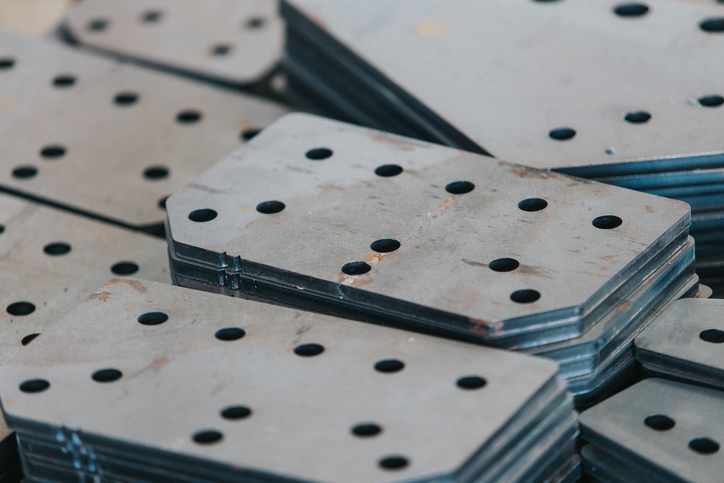
In modern manufacturing, two processes dominate: CNC machining and injection molding. CNC machining subtractively shapes metal or plastic with exceptional precision. It also offers minimal setup time and superior material versatility, which makes it ideal for prototypes and mid-volume production. On the other hand, injection molding forms identical plastic parts through high-pressure casting. It suits high-volume runs despite higher initial costs. This article compares CNC machining vs injection molding, examining their technical and economic aspects to help you choose the right method for your application.

Understanding CNC Machining
What is CNC Machining?
CNC machining is a computer-controlled manufacturing process that entails removing material from a solid block with precision cutting tools. This subtractive method follows digital design instructions exactly, as programmed by an operator. As a result, it is capable of producing parts with exceptional accuracy and complex geometries, achieving superior surface finishes and tight tolerances. Due to these features, CNC is indispensable for making prototypes and custom components. It also ensures material integrity and offers unmatched design flexibility, making it vital for high-value production.

Key Strengths of CNC Machining
Precision and Tight Tolerance
CNC machining delivers exceptional dimensional accuracy and repeatability. It consistently holds tolerance within ±0.001 inches or tighter. This precision is critical for aerospace, medical, and automotive components because parts fit and function perfectly every time.
Material Versatility
This machining process is capable of working on an extensive range of materials. It works with metals such as aluminium, stainless steel, and titanium, and also handles various engineering plastics and composites. This versatility allows for optimal material selection based on strength, weight, or thermal requirements.
Rapid Prototyping and Short Runs
CNC machining is ideal for prototyping and low- to medium-volume production. No costly molds or tooling are required to begin manufacturing, significantly reducing initial lead times and costs. This makes it suitable for swift design iteration and market testing.
Design Complexity and Flexibility
CNC systems produce highly complex geometries that other processes find difficult to fabricate, such as intricate contours, deep cavities, and fine details. Also, design changes can be implemented quickly through software updates, eliminating the need for expensive physical tooling changes.
Superior Strength and Material Properties
Machined parts retain the full strength of the raw material. Unlike molding, it does not alter the material’s internal structure. This results in components with enhanced structural integrity, which are better suited for high-stress and critical applications.
Understanding Injection Molding
What is Injection Molding?
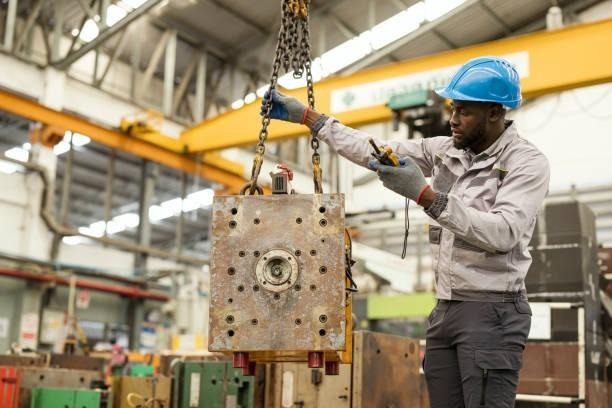
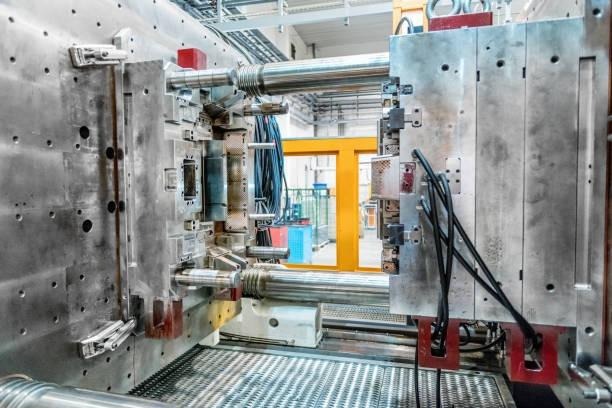
Injection molding shapes molten plastic using high-pressure molds. It excels at mass-producing simple plastic parts efficiently. However, it requires expensive custom tooling for each design. This makes it costly for prototypes or small batches. Once a mold is created, the process allows very little flexibility. These limitations restrict the use of injection molding compared to the versatility of CNC machining.
Key Strengths of Injection Molding
High Volume Production Efficiency
Injection molding is unparalleled for mass manufacturing identical plastic parts. Once the initial mold is created, the per-unit cost becomes extremely low. Thus, making it economically superior for production runs in the tens or hundreds of thousands.
Excellent Surface Finish
Injection-molded parts typically require minimal post-processing because they emerge from the mold with a high-quality, consistent surface finish. This can eliminate the need for additional finishing operations.
Complex Plastic Part Geometry
The process can form intricate shapes and fine details in a single step. It efficiently produces complex features such as thin walls, bosses, and living hinges. This is often difficult to achieve economically with other methods.
Material and Colour Variety
It supports a wide range of thermodynamic materials and colorants. Manufacturers can achieve specific material properties and aesthetics directly out of the mold. This simplifies the supply chain for plastic products.
Minimal Scrap and Waste
Injection molding is a net-shape manufacturing technique that generates very little material waste during production. This can improve sustainability for large plastic part runs.
CNC Machining vs Injection Molding: Key Comparison Factors
Lead Time of CNC Machining vs Injection Molding
CNC machining offers significantly shorter initial lead times since production can begin immediately from a digital file. In contrast, injection molding requires extensive lead time for design, prototyping, and manufacturing of complex molds before any parts can be produced.
Surface Finish on CNC Machining vs Injection Molding
Injection molding provides consistent surface quality directly from the mold, but may lack the precision finish achievable through CNC machining. CNC machining produces superior surface finishes with minimal post-processing, though tool marks may require finishing.
Material Options in CNC Machining vs Injection Molding
CNC machining supports a vast range of materials, including metals, composites, and molding, which is primarily limited to polymers and elastomers. This restricts its use in applications that require metal strength or specific material performance.
Volume and Scalability of CNC Machining vs Injection Molding
For low-to-medium production volumes, custom components, and rapid prototyping without volume restrictions, CNC machining provides the most practical and cost-effective solution. In contrast, injection molding becomes economically advantageous only at very high production volumes. This is because the reduction in per-unit cost justifies the substantial upfront investment in tooling and mold development.
The following table summarizes key factors to help guide you in selecting the appropriate process for your project.
| Factors | CNC Machining | Injection Molding |
| Best for | Prototypes, low-to medium volume | Very high-volume production |
| Upfront Cost | Low | Very High |
| Design Changes | Easy | Difficult and costly |
| Precision | Very High | Good |
| Material | Metals and Plastics | Primarily Plastic |
When to Choose CNC Machining
CNC machining is the best choice when manufacturing priorities focus on precision, material strength, and flexibility rather than high-volume production. This process excels with metal components and complex designs. It allows rapid design changes without financial penalties. It proves more adaptable than injection molding for most manufacturing needs.
When to Choose Injection Molding
Injection molding is only economically viable for the mass production of identical plastic parts. It requires extremely high volumes to justify its substantial upfront mold costs and extended lead times. This process lacks flexibility for design changes once production begins. On the other hand, CNC machining offers greater adaptability and cost-effectiveness vs injection molding for most other manufacturing scenarios.
CNC Machining at ITD Precision
Although both processes have distinct roles in manufacturing, CNC offers clear advantages for precision, flexibility, and low-to-medium volume production. ITD Precision specializes in CNC machining, delivering high-accuracy metal and plastic parts with rapid turnaround and no costly tooling requirements. We also offer insert molding services to suit your fabrication needs. With decades of expertise, advanced machinery, and a commitment to quality, ITD offers start-to-finish solutions, from prototyping to production. We ensure functional reliability and design integrity for industries where precision matters most. Contact us today, and let us engineer precision into your next project with machining excellence.