Introduction
Insert molding demands perfect harmony between molten plastic and a rigid metal insert. The plastic must flow smoothly around the metal, bonding securely without creating any weak spot or internal stress. Getting this right through trial and error is slow, expensive, and risky. Mold flow analysis solves this challenge by using sophisticated computer simulation to visualize and predict exactly how the plastic will behave inside the mold, long before it’s built. This article explains how mold simulation works and how it leads to better parts, faster production, and more reliable manufacturing.
What Is Mold Flow Analysis?
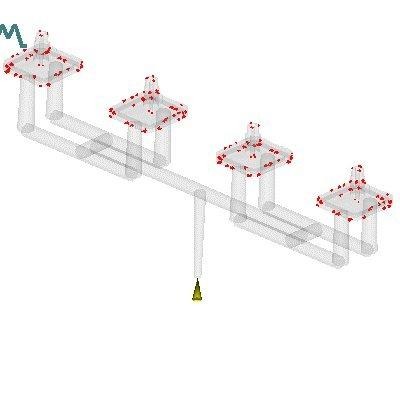
Mold flow analysis involves using sophisticated computer simulation to predict how molten plastic will move and cool inside an insert mold before production. The software calculates the complex physics of fluid dynamics, heat transfer, and material shrinkage during polymer flow under high pressure. These calculations require material-specific data such as viscosity curves and shear rate behaviour to accurately model flow resistance. Software such as Moldex3D, Cadmould, and Autodesk Moldflow allows engineers to virtually test different gate locations, materials, and process settings. This helps optimize the mold for quality and efficiency from the first shot.
How Mold Flow Simulation Works
Geometry Import and Mesh Creation (Creating the 3D Model)
The process begins by importing the 3D CAD models of the mold cavity, core, and metal insert into the software. The software then generates the mesh, a digital web of millions of tiny interconnected elements. These elements represent the space where plastic will flow.
Material Selection and Process Parameters
Engineers load the specific polymers’ behavioural data from an extensive material database integrated into the software. This data includes critical properties such as viscosity curves, thermal characteristics, and shrinkage rates. Simultaneously, key processing parameters are set, including melt temperature, injection speed, packing pressure, and cooling time.
Running the Simulation
With all inputs defined, the software solves millions of complex equations to simulate the injection cycle. It calculates how the plastic front advances, where it might hesitate or weld, how heat transfers between the plastics, mold steel, and metal insert. Also, it estimates how the part will shrink and warp upon cooling.
Interpreting Results (Identifying Defects)
The results show exactly how the plastic fills the mold, where hot or cold spots form, and how pressure builds. This allows the team to identify potential problems, such as air pockets, weak weld lines over the insert, or areas of high stress that could cause warping before the mold is built.
Why Mold Flow Analysis Is Critical for Insert Molding
Managing the Thermal Influence of the Metal Insert
A metal insert acts as a massive heat sink, chilling the molten plastic on contact. This rapid local cooling can prematurely freeze the flow, causing incomplete encapsulation. Mold flow analysis predicts these thermal barriers, thus allowing engineers to adjust temperatures or gate placement to ensure complete fill and strong bonding at the interface.
Predicting and Preventing Flow Hesitation
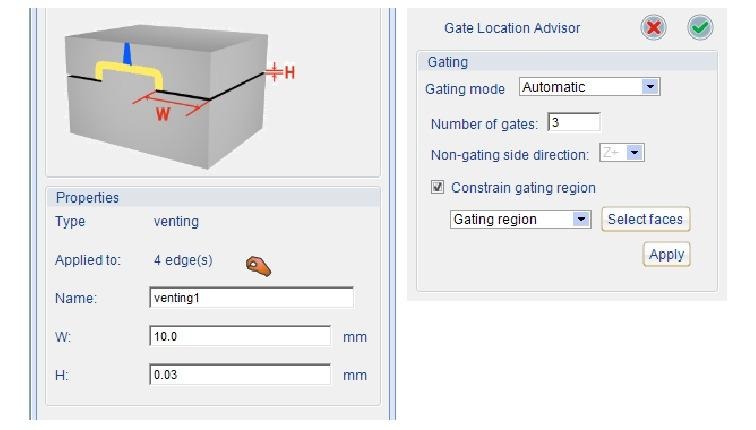
Molten plastic naturally hesitates when it encounters the complex geometry of an insert. This hesitation can lead to visible knit lines or weak structural seams directly over critical areas. Simulation software visualizes the exact flow path, enabling design changes that promote uniform, simultaneous flow around the insert to eliminate these defects.

Controlling Warpage from Differential Shrinkage
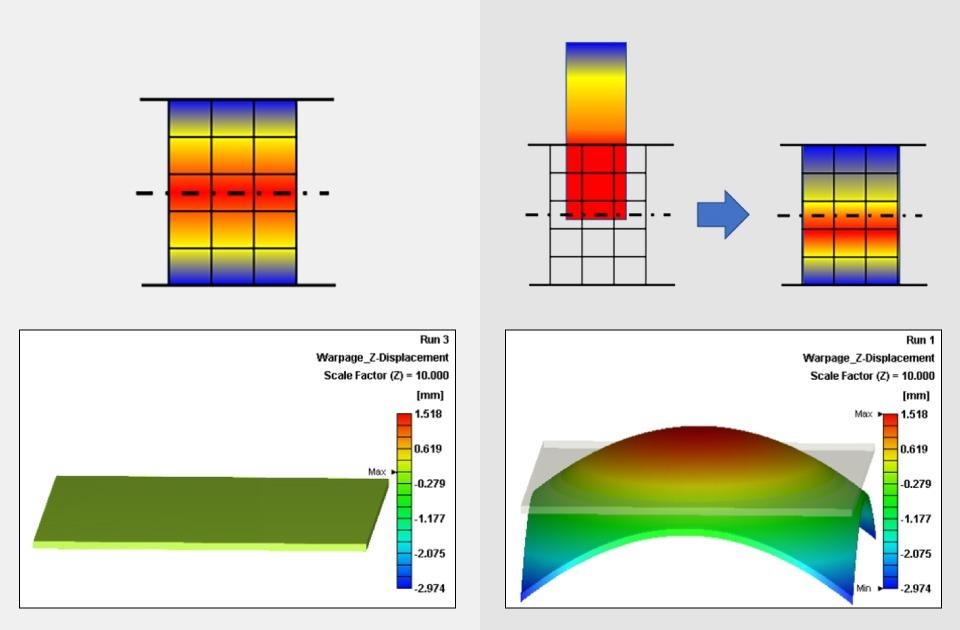
The plastic shrinks as it cools, but it shrinks at a different rate than the metal insert and cools unevenly around it. This mismatch creates internal stresses that distort the part’s shape. Simulation calculates these stresses and predicts warpage, guiding adjustments to cooling lines or packing pressure to ensure dimensional stability.
Ensuring Robust Metal-to-Plastic Bonding
Inadequate flow pressure or temperature at the interface can lead to delamination. Mold flow analysis models the pressure and temperature conditions at every point of contact between the plastic and metal. As a result, it is possible to verify if the process will create a strong, reliable mechanical bond for the part’s lifecycle.
Key Benefits of Mold Flow Analysis in Insert Molding
Higher First-Part Quality
Mold flow analysis directly targets and prevents defects before production starts. This ensures superior bond strength at the metal-plastic interface, precise dimensional accuracy, excellent surface finish, and inherent structural reliability in the very first part off the tool.
Shorter Development Cycle Times
Simulation dramatically accelerates the mold design process. By virtually optimizing cooling channel placement and creating balanced runner systems, it eliminates weeks or months of physical mold trials and tuning iterations, thus reducing time to production readiness.
Lower Total Production Cost
Mold flow analysis reduces the need for insert mold rework, enables faster product validation with fewer prototypes, minimizes material scraps, and ensures a more predictable on-budget production launch.
Common Issues Mold Flow Can Detect Early
- Weld lines: Visible weak seams where separate plastic flow fronts meet and fuse.
- Air traps: A Pocket of trapped air causing bubbles or a hollow space in the part.
- Overpacking: Excessive pressure causes high stress, flashing, or difficulty ejecting the part.
- Short Shots: Incomplete cavity fill where plastic solidifies before reaching all areas.
- Warpage due to asymmetric cooling: Uneven part shrinkage and distortion.
How Mold Flow Analysis Supports Design for Manufacturability (DFM)
Mold flow analysis fundamentally transforms design for manufacturability by enabling a proactive engineering dialogue from the earliest concept stage. Designers leverage simulation to critically evaluate and refine part geometry, using its predictive power to strategically adjust wall thickness for uniform fill, strategically place ribs and bosses to minimize sink marks, and identify the optimal gate location for balanced flow. For insert molding, it is indispensable to evaluate the metal insert’s geometry and placement to ensure smooth encapsulation and prevent hesitation. Moreover, the simulation visually tracks weld line movement, allowing engineers to reposition these potential weak points away from high-stress areas or critical aesthetic surfaces. This iterative virtual testing process anticipates manufacturing risk long before tooling begins, ensuring the final design is not only functional but also inherently optimized for efficient, high-quality, and cost-effective production.
Choosing the Right Partner for Mold Flow Analysis and Insert Molding
Mastering insert molding requires more than just software; it demands a partner who bridges the gap between digital prediction and physical production. True success comes from using mold flow analysis as a guide, interpreted by engineers with deep, hands-on molding experience. This ensures every virtual adjustment is validated by real-world tooling and material knowledge. In addition, for a seamless journey from a flawless simulation to a perfect part, partnering with an expert who integrates both worlds, like ITD Precision, is the most critical step.
At ITD Precision, mold flow analysis is an essential part of our insert molding workflow. Our engineering team uses advanced simulation tools, IATF-certified quality systems, and decades of tooling expertise to help customers eliminate defects before steel is cut. If your next project demands reliable bonding, optimized cycle times, and predictable part performance, contact us today. We turn complex insert molding challenges into consistent, production-ready solutions.