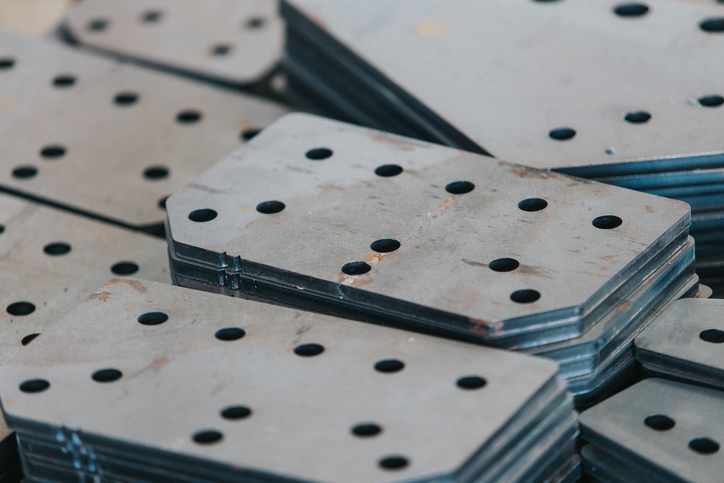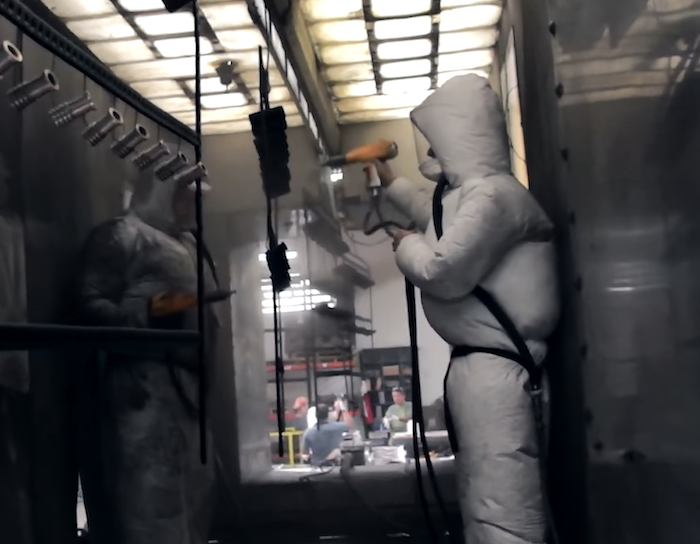
Selecting a metal for a stamped component is a performance decision, not simply a purchasing decision. The material affects part strength, corrosion life, conductivity, weight, tooling requirements, forming risk, finishing needs, and total production cost. For many OEM programs, the initial choice comes down to four material families: carbon steel, stainless steel, aluminum, and copper. Each offers a different balance of mechanical performance and manufacturability. The correct choice depends on what the finished part must do, where it will operate, and how it will be produced.
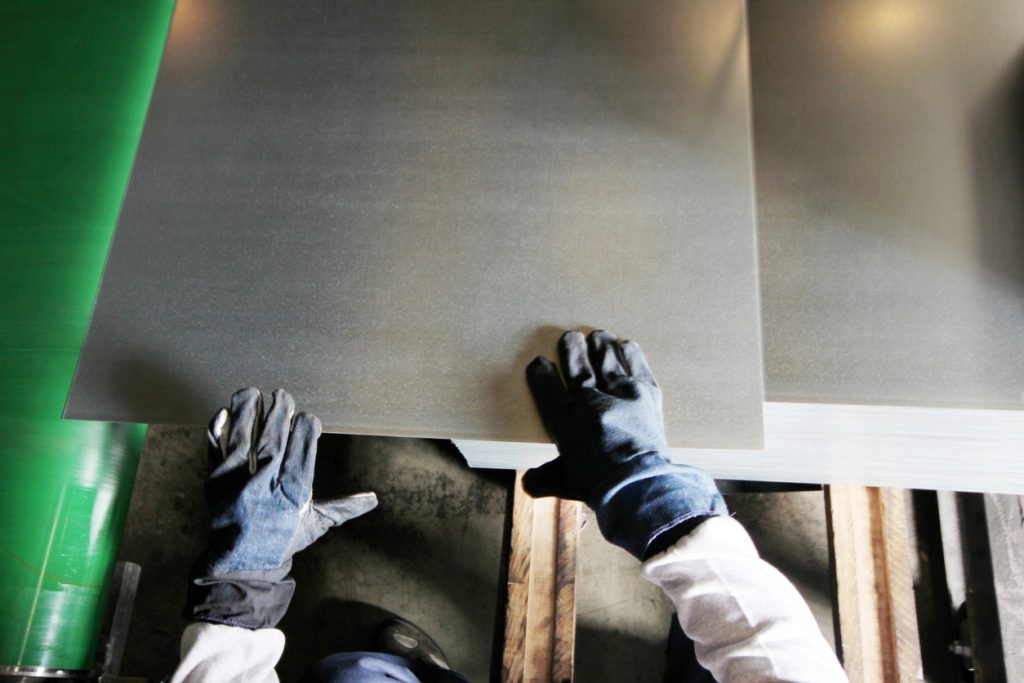
Which Metal Is Best for a Stamped OEM Part?
As an initial guide:
- Choose carbon steel when economical strength, weldability, and high-volume production are the priorities.
- Choose stainless steel when corrosion resistance, durability, cleanliness, or temperature performance is critical.
- Choose aluminum when low weight, corrosion resistance, or heat transfer matters more than maximum stiffness.
- Choose copper or a copper alloy when electrical or thermal conductivity drives the design.
This comparison identifies the material family to investigate first. The final specification must also define the exact grade, temper, thickness, surface condition, and secondary processes.
Carbon Steel, Stainless Steel, Aluminum, and Copper Compared
| Selection factor | Carbon steel | Stainless steel | Aluminum | Copper and copper alloys |
| Strength | Broad range with economical structural strength | Moderate to high, depending on grade and condition | Low to high, depending on alloy and temper | Low in high-conductivity copper; higher in selected alloys |
| Corrosion resistance | Low without coating or finishing | Good to excellent when the grade matches the environment | Good in many atmospheric environments | Generally good, but alloy- and environment-dependent |
| Electrical conductivity | Low | Low | Good | Excellent in high-purity grades |
| Thermal conductivity | Moderate | Low | Good | Excellent |
| Formability | Excellent in low-carbon drawing grades; generally decreases as strength rises | Good in selected grades, with greater work hardening and springback | Good to excellent in selected alloys and tempers | Generally good, but highly dependent on alloy and temper |
| Relative weight | High | High | Low | High |
| Typical cost position | Usually lowest | Higher than carbon steel | Often higher per pound than carbon steel | Usually highest and more price-sensitive |
| Common uses | Brackets, clips, housings, retainers, and structural parts | Corrosive-service parts, durable hardware, and outdoor components | Lightweight brackets, covers, enclosures, and thermal-management parts | Busbars, terminals, contacts, connectors, and heat-transfer parts |
These are directional comparisons. Grade-specific data and production testing should govern the final decision.
Choose Carbon Steel for Economical Strength and Production Efficiency
Carbon steel is often the first material evaluated for stamped brackets, supports, clips, housings, retainers, and general structural components.
Low-carbon cold-rolled and drawing-quality steels can provide strong formability, controlled surface quality, and predictable progressive-die performance. Higher-strength carbon and low-alloy steels can increase load capacity or support thinner designs, but they generally require closer control of springback, edge quality, press force, and die design.
Carbon steel is a strong choice when:
- The component carries structural or mechanical loads.
- High production volume makes material efficiency important.
- Welding or mechanical assembly is required.
- A coating can provide the necessary corrosion protection.
- Component weight is not the primary constraint.
Carbon steel requires additional attention when:
- The part will face moisture, salts, chemicals, or outdoor exposure.
- Tight bends or pierced edges are combined with high-strength grades.
- Coating thickness affects dimensions, fit, or grounding.
- Heat treatment or hardening is required after stamping.
It is important to note that carbon steel is not a uniform material. A low-carbon drawing grade and an advanced high-strength steel may behave very differently in the same die. Modern advanced high-strength steel guidance treats grade, coating, forming method, joining process, and component design as an integrated system.
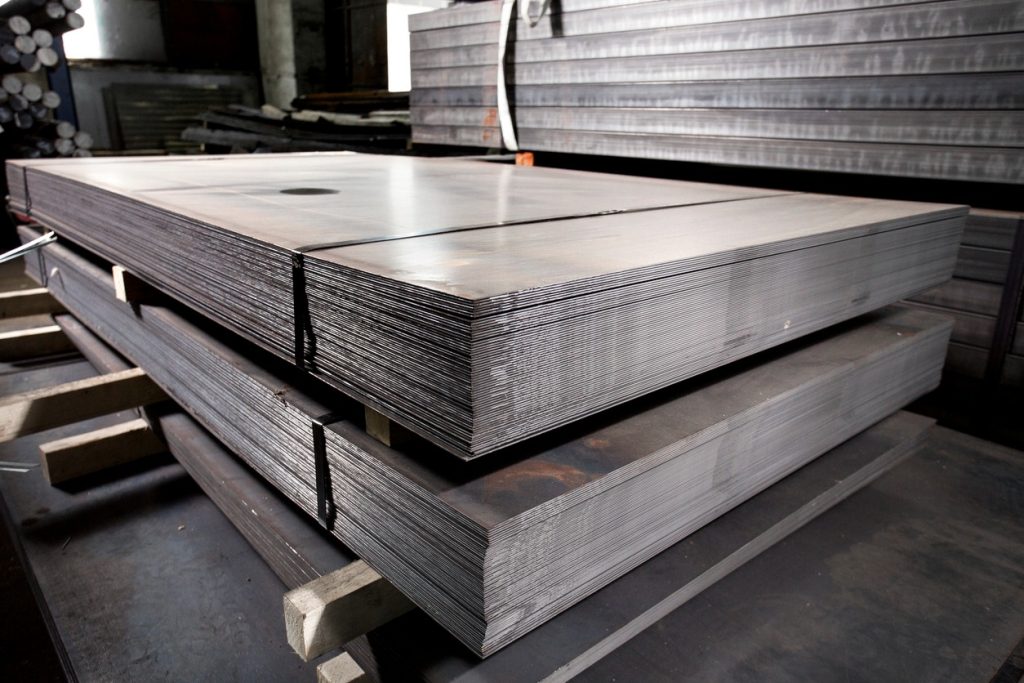
Choose Stainless Steel for Corrosion Resistance and Long Service Life
Stainless steel is appropriate when a stamped part must resist corrosion, repeated cleaning, outdoor exposure, chemicals, or elevated temperatures.
Austenitic 300-series grades are widely used because they combine corrosion resistance with useful formability. They also work-harden during forming, which can increase press force, springback, and tooling demands.
The 400 series includes both ferritic and martensitic grades, so it should not be treated as a single interchangeable category.
Stainless steel is a strong choice when:
- The component must resist corrosion without relying on a separate coating.
- Cleanability or surface appearance is important.
- The part must remain durable in demanding service conditions.
- Higher strength is needed in a relatively thin section.
Also, stainless steel requires additional attention when:
- Springback affects angular or dimensional accuracy.
- The design includes severe forming or tight radii.
- Surface scratching or contamination is unacceptable.
- Material pickup and forming force may affect die life.
Stainless steel can be stamped successfully, but tooling and process design must account for its strength, work-hardening behavior, springback, lubrication, and forming-force requirements.
Choose Aluminum When Weight and Heat Transfer Drive the Design
Aluminum is commonly selected for stamped covers, enclosures, brackets, shields, and transportation components where mass reduction creates measurable value.
Its low density can reduce finished-part weight, while many aluminum alloys provide useful corrosion resistance and thermal conductivity. The selected alloy and temper strongly influence strength, bendability, springback, joining, and surface durability.
For example, 3xxx-series alloys offer useful general-purpose workability. Many 5xxx-series alloys combine moderate-to-high strength with weldability and corrosion resistance. The heat-treatable 6xxx series offers moderate strength, corrosion resistance, and useful fabrication characteristics.
Aluminum is a strong choice when:
- Reducing component or assembly weight is a design objective.
- The part must dissipate heat.
- Atmospheric corrosion resistance is needed.
- A nonmagnetic material is preferred.
- The design can accommodate lower stiffness than steel.
Aluminum requires additional attention when:
- The component must resist denting or high structural loads.
- Surface appearance is critical.
- The selected temper limits bendability.
- Joining involves welding, fasteners, or contact with dissimilar metals.
- Cost is being compared only by price per pound.
A lighter metal may still produce the lower-cost component when reduced material mass, handling, finishing, or downstream assembly offsets the higher price per pound.
Choose Copper When Conductivity Is the Primary Requirement for Stamped Parts
Copper is the leading candidate for stamped busbars, terminals, contacts, connectors, and heat-transfer components.
High-conductivity copper grades provide excellent electrical and thermal performance with strong cold-working capability. C110 electrolytic tough-pitch copper is widely used for conductive stamped parts and has a minimum conductivity of 100% IACS in the annealed condition.
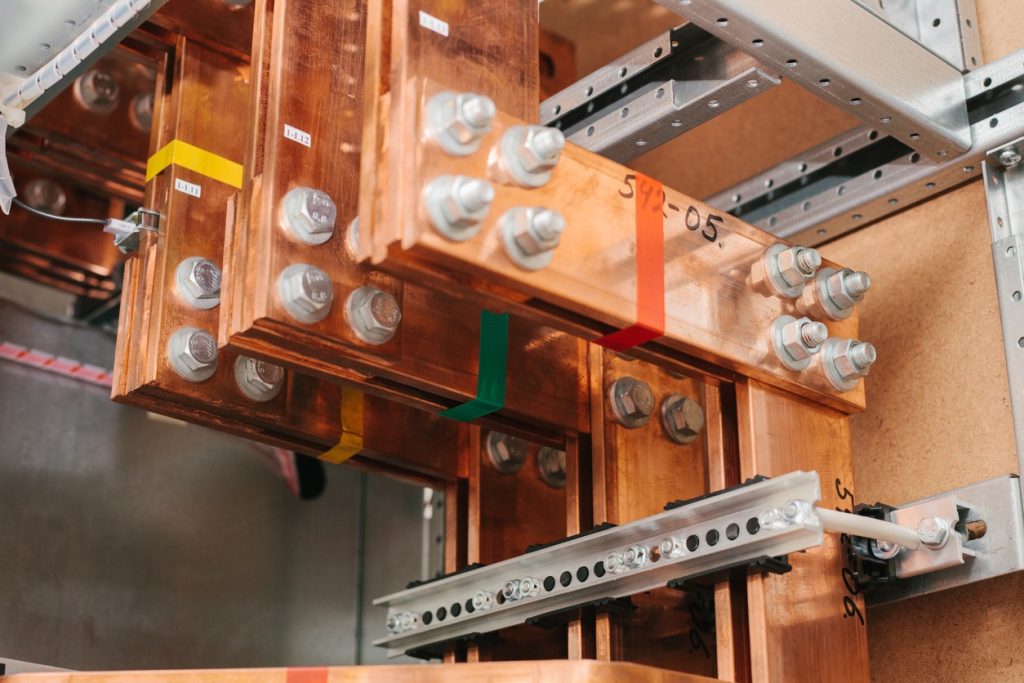
Pure copper grades provide excellent conductivity but relatively modest strength. So, copper alloys such as brass and phosphor bronze sacrifice some conductivity to gain strength, spring performance, wear resistance, or corrosion resistance.
Copper is a strong choice when:
- Electrical resistance must be minimal.
- The component transfers or dissipates heat.
- Tight forming is required in a suitable grade and temper.
- Plating, soldering, brazing, or another joining method is part of the design.
Copper requires additional attention when:
- Raw-material cost and market volatility affect program economics.
- Soft material conditions increase scratching or galling risk.
- Higher strength is necessary without losing excessive conductivity.
- Burr control is critical for electrical clearances or assembly.
The correct question is rarely simply, “Should this part use copper?” It is, “Which copper grade and temper provide the required conductivity, strength, spring behavior, and formability?”
How Formability Changes the Material Decision
A material may satisfy the finished component’s mechanical requirements and still be unsuitable for the proposed stamping sequence.
Formability depends on:
- Grade and temper
- Thickness
- Grain direction
- Bend radius
- Edge quality
- Draw depth
- Hole-to-edge distance
- Tool clearance
- Lubrication
- Forming sequence
Tighter bends, drawn walls, extruded holes, and complex progressive-die features increase strain. Higher-strength or heavily cold-worked materials generally provide less forming margin and create more springback.
OEM engineers should review the part with the stamping supplier before finalizing the material specification. A small change in bend radius, material condition, or forming sequence can reduce cracking risk and improve production stability without changing the component’s function.
Compare Total Component Cost, Not Raw-Material Price
The least expensive material per pound does not always produce the least expensive part.
A complete cost comparison should include:
- Material utilization and scrap value
- Press speed and required tonnage
- Tooling materials and coatings
- Lubrication
- Die maintenance
- Secondary heat treatment
- Corrosion-resistant finishing
- Joining and assembly
- Inspection requirements
- Component weight
- Expected service life
- Failure and warranty risk
Carbon steel may provide the lowest initial material cost but requires a protective finish. Stainless steel may eliminate that finishing step. Aluminum may cost more per pound but reduce finished-part weight. Copper may carry the highest material cost but remain essential for meeting an electrical-resistance requirement.
The best choice is the material that meets the specification with the lowest total cost and acceptable manufacturing risk.
What Should an OEM Material Specification Include?
Avoid specifying only “steel,” “stainless,” “aluminum,” or “copper.” A production-ready material callout should address:
- Applicable material standard
- Exact grade or alloy
- Temper, hardness, or mechanical-property range
- Thickness and tolerance
- Surface condition
- Grain direction when critical
- Coating, plating, passivation, or finish
- Required corrosion, conductivity, hardness, or functional testing
- Material certification and traceability
- Approved substitutions and engineering-change requirements
Equivalent grades should not be accepted automatically. Two materials with similar general descriptions may form, join, finish, or perform differently.
A Practical Material-Selection Sequence for Stamped Parts
OEM teams can narrow their options using this process:
- Define the component’s loads, operating environment, service life, weight target, and conductivity requirements.
- Eliminate material families that cannot meet those nonnegotiable needs.
- Compare suitable grades and tempers within the remaining families.
- Review forming features, tolerances, and secondary operations with the stamping supplier.
- Validate the chosen material using production-representative stock before releasing the final tooling and process.
This sequence prevents the material callout from being finalized independently of tooling and production requirements.
Partnering With ITD Precision
ITD Precision stamps carbon steel, high-strength low-alloy steel, stainless steel, aluminum, copper, and galvanized steel. Its published metal-stamping capabilities include 2D and 3D tooling design, and Minster presses from 100 to 400 tons, with speeds up to 400 strokes per minute. We also provide tool and die, austemper heat treating, e-coating, insert molding, and light assembly. These integrated services allow material, tooling, finishing, and downstream production requirements to be reviewed together.
Contact us to discuss your component’s loads, operating environment, conductivity needs, tolerances, production volume, and secondary-process requirements.