Introduction
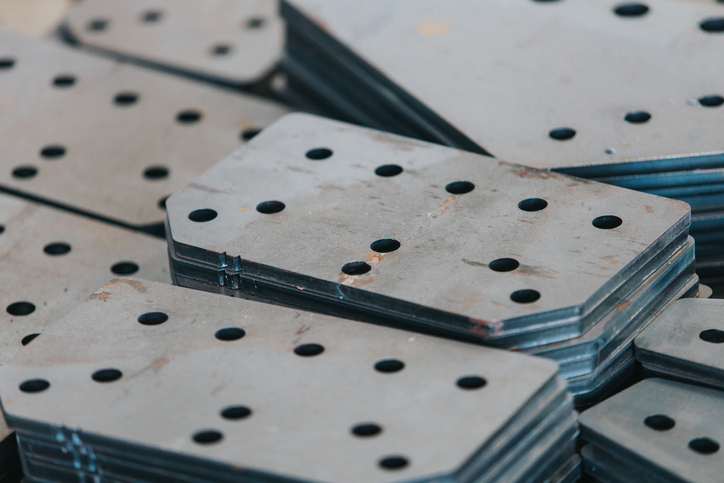
Stamped metal parts may look perfect when leaving the production line, but become a reliability problem shortly after. Corrosion often begins at the places most vulnerable to exposure: pierced holes, formed corners, cut edges, recesses, and other features where moisture, salts, chemicals, or contaminants can collect. On brackets, retainers, clips, housings, and structural stampings, deterioration in these areas can eventually affect fit, strength, appearance, or component performance. For OEM engineers and procurement teams, that makes corrosion protection a critical part of the engineering decision. Meaning that it should be considered early enough in the design phase, and not an afterthought during finishing.
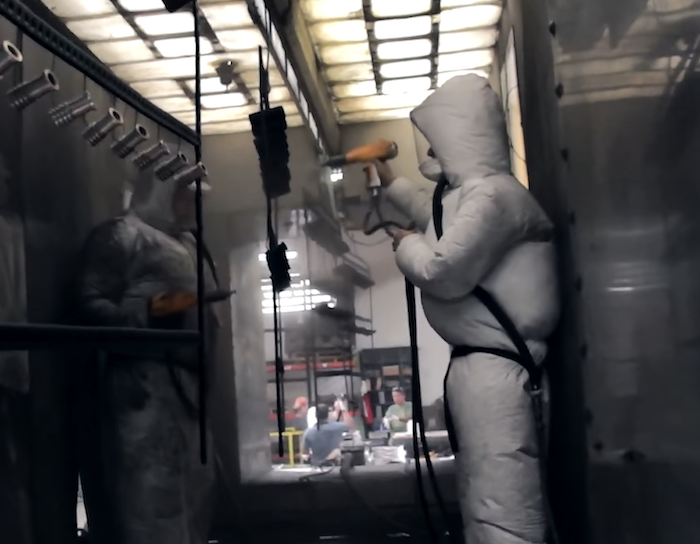
E-coating provides effective protection for stamped components because the process can reach complex conductive surfaces while maintaining controlled film build. But coating performance depends on factors such as part geometry, stamping quality, surface condition, tolerances, drainage, curing, and downstream assembly. Understanding these factors helps manufacturers design stamped components that remain reliable long after production ends.
Why Stamped Metal Parts Create Unique Coating Challenges
Stamped components often have features that make corrosion protection more challenging than on a simple flat surface. Bends, flanges, pierced holes, channels, drawn sections, recessed areas, and tight transitions can all affect how a coating reaches and protects the part. These features matter because corrosion rarely attacks every surface at the same rate. Cut edges, sharp corners, and areas where moisture or contaminants can collect are often more vulnerable than broad, flat sections. Part geometry can also influence how well pretreatment chemicals drain, where coating material accumulates, and which areas are more difficult to inspect. Tight-tolerance features introduce another concern because even a thin coating adds material to the surface.
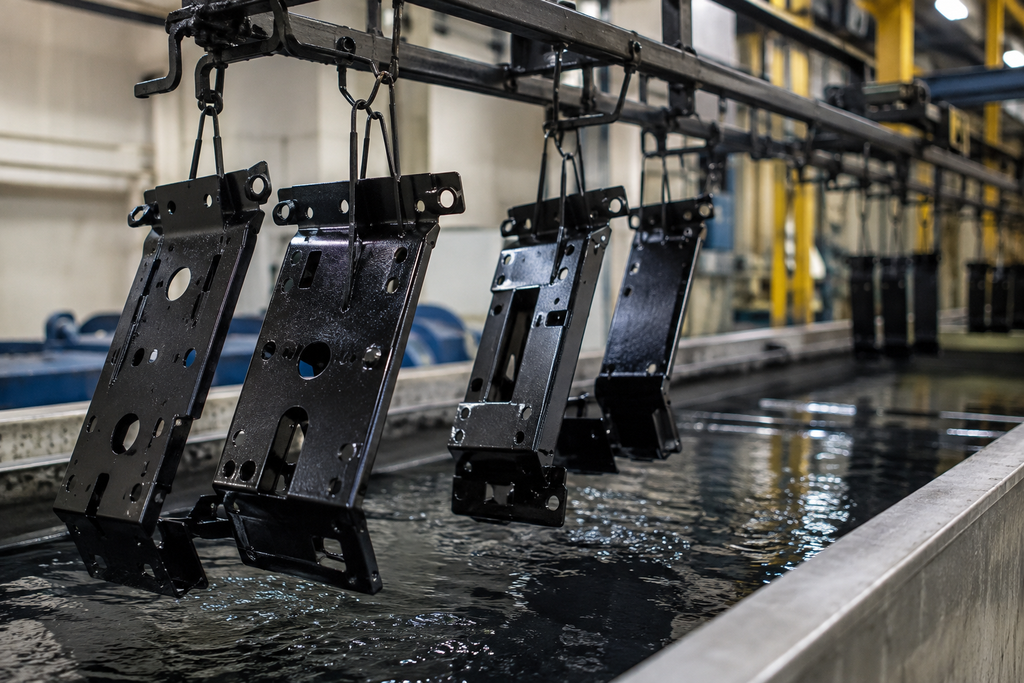
For engineers, the challenge is not simply choosing a corrosion-resistant finish. It is making sure the coating process works with the actual stamped geometry. E-coating is well suited to this challenge because the part is fully immersed during deposition. This allows the coating process to reach many recessed and difficult-to-access areas that are harder to protect consistently with line-of-sight application methods. The result is a finishing approach that can accommodate complex stamped designs while still supporting corrosion protection, dimensional control, and repeatable high-volume production.
How E-Coating Protects Complex Stamped Metal Parts
Complex stamped parts can be difficult to finish because many of their most vulnerable surfaces are hard to reach with conventional spray methods. Features such as deep recesses, narrow channels, cavities, and piercings often sit outside a direct spray path, increasing the risk of inconsistent coverage.
E-coating offers an effective solution to this problem. Because the entire part is immersed in the coating bath, electrically charged paint particles can deposit across conductive surfaces throughout the component. This gives the process strong throwing power, allowing it to reach many areas that would be difficult to coat using line-of-sight application alone. That advantage becomes especially important on parts with multiple bends or enclosed features. A stamped bracket, for example, may include flanges, mounting holes, channels, and formed sections that all need protection without creating excessive coating buildup. For high-volume stamped components, this combination of reach and film control helps engineers protect complex geometries without sacrificing fit, assembly performance, or production consistency.
How Stamping Quality Impacts E-Coat Performance
The performance of a coating largely depends on the surface underneath it. Defects that occur during stamping can carry forward into finishing and weaken the final corrosion barrier. Burrs, sharp edges, surface scratches, and inconsistent forming can create areas where coating performance becomes harder to control. Also, the presence of residual stamping oils and lubricants can interfere with pretreatment and reduce coating adhesion if not removed completely.
Part consistency is equally important. When dimensions, edge conditions, or formed features vary from one production run to another, coating results can become less predictable. This is why corrosion protection should not be treated as a separate step from stamping quality. Tool condition, surface cleanliness, edge control, and repeatable forming all contribute to the performance of the finished part.
For OEMs, better upstream control means fewer opportunities for coating defects to develop into long-term reliability problems.
What Engineers Should Consider Before Specifying E-Coating for Stamped Metal Parts
A good e-coat specification starts with the way the part will function in the real world. Corrosion resistance matters, but so do fit, assembly, exposure conditions, and downstream manufacturing steps.
Engineers should consider several factors early in the design process:
- Film thickness: The coating must provide adequate protection without interfering with dimensions.
- Tight-tolerance features: Holes, slots, tabs, press fits, and mating surfaces may require special attention.
- Masking needs: Threads, electrical contact points, weld areas, or critical interfaces may need to remain uncoated.
- Drainage: Part geometry should allow pretreatment solutions and rinse water to drain effectively.
- Rack locations: Contact points can affect where the part is held during processing and where coating may be interrupted.
- Cure temperature: Materials, seals, inserts, or assemblies must tolerate the required thermal cycle.
- Downstream operations: Welding, molding, assembly, or topcoating may influence when and how e-coating is applied.
- Service environment: Humidity, chemicals, salt exposure, UV, and temperature cycling all affect coating selection.
Addressing these factors before production begins helps prevent costly redesigns and ensures the coating supports the part’s intended performance rather than creating new manufacturing challenges.
ITD Precision’s Integrated Approach to Stamped and E-Coated Components
ITD Precision combines metal stamping and in-house e-coating within a vertically integrated manufacturing operation. That allows engineering, production, and quality teams to coordinate critical requirements from the stamped part through the finished coating. At our Harlingen, Texas facility, we operate a Therma-Tron-X electro-deposition system supported by chemical laboratory capabilities, salt spray testing, and AIAG CQI-12-compliant processes. This gives customers a more direct path for managing coating quality, production consistency, and corrosion-performance requirements.
We also support customers with in-house tool and die, heat treating, insert molding, and light assembly. For OEM engineers and procurement teams, that broader capability can reduce supplier handoffs and simplify responsibility across multiple manufacturing stages.
Need help evaluating e-coating for a stamped metal component? Contact us to review your part geometry, corrosion requirements, tolerances, and production needs.