When it comes to protecting metal components, few types of finishing methods are as reliable or as versatile as E-Coating. Short for electrophoretic coating, this process uses electrical current to apply a thin, even layer of paint or polymer to metal surfaces. Moreover, it’s a go-to solution for manufacturers seeking excellent corrosion resistance, uniform coverage, and scalable production, all without compromising appearance or compliance. This article reviews how E-Coating works, common types, benefits, and how ITD Precision provides the right coating for every application.
What Is E-Coating?
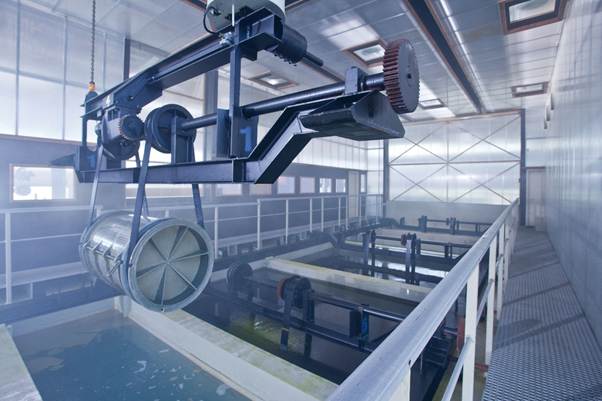
E-Coating is an electrochemical process that uses an electric current to deposit a protective coating, such as paint or polymer, onto a metal surface. This highly controlled surface finishing method ensures even, consistent coverage, even on parts with complex shapes, deep recesses, or hard-to-reach areas. Generally, it follows a step-by-step process that includes the following:
- Cleaning: Removes oils, dirt, and oxidation from the metal to ensure strong adhesion.
- Pretreatment: Often involves applying a conversion coating (like zinc phosphate) that boosts corrosion resistance and bonding.
- Electrodeposition: The part is submerged in a bath of charged particles. An electric current causes the coating material to migrate and bond uniformly to the metal surface.
- Rinsing: Any excess material is removed to maintain a smooth, consistent film.
- Curing: The coated part is baked in an oven, hence allowing the film to crosslink and form a hard, durable finish.
Compared to other finishing methods like powder coating or traditional wet paint, E-Coating offers more advantages and several types. These include better edge coverage, tighter film thickness control, and improved consistency, especially in high-volume production environments.
Benefits of E-Coating
Whether you’re coating a small component or running thousands of parts through a production line, E-Coating is right for you. This is because it delivers a range of benefits that make it one of the most versatile and cost-effective finishing methods available.
Here are some reasons why manufacturers choose E-Coating over other coating options:
- Exceptional Corrosion Resistance: E-Coated parts can stand up to salt spray, humidity, and harsh environmental exposure. Thus, making this method ideal for automotive, industrial, and outdoor applications.
- Uniform Coverage, Even on Complex Parts: Thanks to the electric charge used during deposition, E-Coating wraps parts evenly. This enables it to reach tight recesses, corners, and weld seams that other coatings might miss.
- Scalable for High-Volume Production: Automated lines, precise film control, and repeatable results make E-Coating perfect for mass production while maintaining consistent quality.
- Environmentally Friendly: Most E-Coat systems use water-based formulas with low volatile organic compounds (VOCs), supporting compliance with EPA and international standards such as RoHS and REACH.
- Durable and Long-Lasting: The cured film forms a strong bond with the substrate, resisting chips, scratches, and chemical attack. This durability helps reduce rework and warranty claims over time.
In short, E-Coating offers the performance of a tough industrial finish with the efficiency and reliability that modern production demands.
Common Types of E-Coating
Not all E-Coatings are the same, and choosing the right one starts with understanding the differences between the core types. Each coating system uses a slightly different chemistry and electrical setup, which directly affects its performance in the real world. Let’s break it down:
Cathodic Epoxy E-Coating
This is the workhorse of E-Coating. In this system, the part you’re coating is negatively charged, pulling positively charged epoxy resin particles toward it.
Why it stands out:
- Outstanding corrosion and chemical resistance.
- Excellent adhesion, even on sharp edges or weld seams.
Best suited for:
- Automotive underbody parts.
- Fasteners, brackets, and chassis components.
- Harsh industrial environments.
One thing to note: Epoxy doesn’t love sunlight. If the part will be exposed outdoors, it’s often paired with a UV-resistant topcoat.
Cathodic Acrylic E-Coating
Think of this as the more weather-savvy cousin to epoxy. It still uses cathodic deposition, but with an acrylic resin that brings better UV resistance to the table.
Why it stands out:
- Good corrosion protection
- Excellent color retention and gloss stability
Best suited for:
- Exterior automotive trim and wheels
- Lawn and garden equipment
- Painted outdoor enclosures
Heads-up: Slightly less chemical resistance than epoxy, but much better for parts that need to look good over time.
Anodic Epoxy E-Coating
This one flips the electrical charge—your part becomes positively charged—and still delivers solid coverage with epoxy-based paint.
Why it stands out:
- More budget-friendly
- Decent corrosion resistance in controlled environments
Best suited for:
- Appliances and electrical housings
- Agricultural tools and machinery
- Low-exposure utility hardware
Just be aware: It’s not designed for high-salt or UV-heavy environments.
Anodic Acrylic E-Coating
If you’re coating a visible part that doesn’t take a beating, this option blends aesthetics with moderate protection.
Why it stands out:
- Smooth, decorative finish
- Better UV performance than anodic epoxy
Best suited for:
- Light fixtures, furniture hardware, and consumer goods
- Applications where look matters more than load-bearing durability
Limitations: Thinner coating layer, hence unsuitable for parts exposed to chemicals or constant wear.
Choosing the Right E-Coating Types for Your Application
So, which E-Coating is the right fit for your project? This decision depends on factors such as the application, working environment, and performance expectations. Here are some practical questions to help guide that choice:
Will the part face harsh conditions, like salt, moisture, or chemicals?
Go with cathodic epoxy. It’s the go-to option when corrosion resistance is a top priority. If your components are heading into underbodies, engine bays, or industrial enclosures, this is the coating that holds up.
Does the part need to stay good-looking over time—especially outdoors?
Cathodic acrylic is your answer. Because it offers the durability of E-Coating with the bonus of UV resistance and color stability. Thus, making it perfect for exterior trim, tool housings, and painted enclosures that need to maintain their finish.
Working with a tight budget or lighter-duty parts?
Anodic epoxy delivers solid value. It’s not built for extreme exposure, but it performs well in indoor or semi-protected environments. Think of appliances, warehouse equipment, or electrical boxes.
Is the part something people will see and touch—like a consumer product or decorative item?
Go for anodic acrylic. It offers a sleek, uniform finish that adds aesthetic appeal, even if it doesn’t match the heavy-duty protection of other coatings.
Need to meet regulatory standards?
No problem. Our E-Coating systems are designed to meet RoHS, REACH, and other environmental compliance benchmarks. As a result, helping you stay ahead of regulations without compromising performance.
At ITD Precision, we don’t believe in one-size-fits-all. Our engineering team works closely with yours to evaluate your specific application, whether that means coating parts that go under the hood or ones that go on a showroom shelf. We’ll help you weigh cost, durability, appearance, and compliance, then deliver a coating solution that suits your application.
ITD Precision’s E-Coating Capabilities
At ITD Precision, E-Coating isn’t just a finishing step—it’s part of a bigger picture. We offer a fully integrated manufacturing process that combines stamping, machining, heat treating, and E-Coating under one roof. That means fewer handoffs, faster turnarounds, and tighter control over quality from start to finish.
We’ve built our E-Coating operation to handle a wide range of production needs—from high-volume runs to custom-coated prototypes. Whether you’re coating thousands of brackets a day or working out a new solution for a specialty component, we’re ready to meet you where you are.
Here’s what makes our approach stand out:
- Fully Integrated Manufacturing: No need to coordinate multiple vendors. We handle forming, finishing, and assembly in-house, saving you time and reducing the risk of errors along the way.
- Custom Finishing Solutions: Need something unique? We offer tailored resin formulations, precision masking for selective coating, and multi-layer systems with topcoats for added durability or aesthetics.
- High-Capacity Coating Lines: Our equipment is built for speed and scalability. We can accommodate large production runs while maintaining consistent quality and efficient changeovers.
- Robust Quality Testing: Every batch is backed by rigorous inspection. We perform salt spray testing, measure film thickness, check adhesion, and inspect finish appearance, all in compliance with ISO and customer-specific standards.
By streamlining multiple manufacturing steps and keeping everything in-house, ITD Precision delivers more than a finished part—we deliver peace of mind. Our customers count on us not just for coatings, but for complete, production-ready solutions that hold up in the real world.
Common Applications of E-Coating at ITD Precision
E-Coating is a go-to solution across many industries, but how you apply it can make all the difference. At ITD Precision, we work closely with customers to fine-tune coating processes for the part’s real-world demands, whether that’s durability, conductivity, aesthetics, or all of the above.
Here are just a few of the ways our customers put our E-Coating capabilities to work:
Automotive Components
From seat structures and sensor housings to transmission brackets and fuel system parts, we provide corrosion protection for critical assemblies that need to last, without compromising dimensional precision.
Electrical Enclosures
Need EMI or RFI shielding? Our coatings help maintain performance in demanding electrical applications, ensuring enclosures stay protected without interfering with function.
Industrial Hardware
Heavy-use parts like bushings, suspension components, and heat-treated hardware benefit from E-Coating’s even coverage and impact resistance, especially in harsh industrial environments.
Consumer Goods
Tools, appliance handles, hardware, and decorative trim all rely on clean, consistent finishes. E-Coating provides a sleek look and strong adhesion, so your product looks good and lasts.
Whether the application is functional, aesthetic, or both, our job is to help you hit performance targets and production goals without missing a beat.
Partner with ITD Precision for Expert E-Coating Solutions
E-Coating may be just one part of your manufacturing process, but utilizing the right approach from the various types is critical. From protecting parts in extreme conditions to delivering the visual appeal your customers expect, the right coating adds real value.
At ITD Precision, we go beyond offering a single service. We’re a vertically integrated partner that combines forming, coating, and quality testing into a streamlined solution designed around your part and your process.
Our team is here to support you at every stage, whether you’re developing a new component, troubleshooting an existing one, or scaling up for production. We’ll help you evaluate performance requirements, choose the best coating system, and make sure it all runs smoothly from start to finish.
Ready to get started? Contact us today to request a quote, schedule a design consultation, or learn how our E-Coating capabilities can support your next project.