Introduction
In precision manufacturing, selecting the right material is not only about achieving the highest strength. It is about controlling how a part behaves under load and, just as importantly, how it fails. The distinction between brittle and ductile material behavior defines whether a component absorbs energy safely or fractures suddenly. This decision directly affects formability, tooling life, product reliability, and long-term cost. This article explains brittle vs ductile behavior from both a material science and manufacturing perspective. It connects failure modes to stamping, heat treatment, and tooling decisions, showing how proper material selection leads to predictable performance and production-ready parts.

Understanding Brittleness
What is Brittleness?
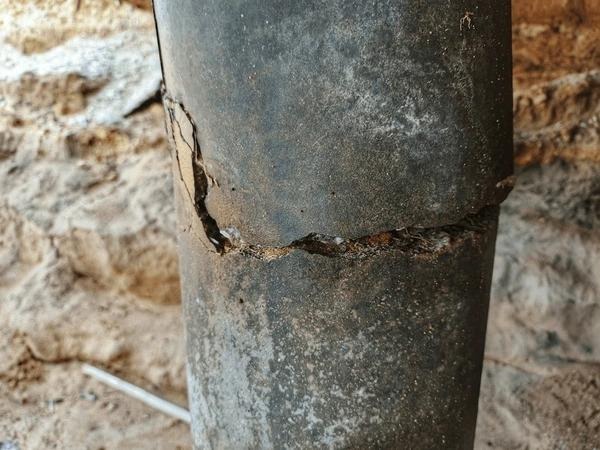
Brittleness describes a material’s tendency to fracture with little or no plastic deformation. When a brittle material reaches its critical stress limit, it fails suddenly rather than yielding gradually. This behavior originates from limited dislocation movement within the crystal lattice, which prevents the material from redistributing stress through plastic flow.
In manufacturing, common brittle materials include hardened steels, cast iron, ceramics, and certain heat-treated alloys. These materials are in high demand because of their hardness, wear resistance, and dimensional stability. However, they are susceptible to tensile stress, impact loading, and geometric stress concentrators such as sharp corners or notches.
Key Characteristics of Brittle Materials
Brittle materials exhibit minimal plastic deformation before failure. Their stress-strain curve remains nearly linear until fracture, offering little warning before rupture. This makes failure sudden and often catastrophic, particularly in dynamic or impact-loaded applications.
Fracture surfaces in brittle materials typically appear granular or crystalline. These cleavage planes indicate atomic bond separation rather than ductile tearing. From a manufacturing standpoint, this means that surface defects, machining marks, or microcracks introduced during tooling or heat treatment can significantly reduce load-bearing capacity.
Temperature and loading rate also influence brittleness. Many steels experience increased brittleness at lower temperatures or under rapid loading. This ductile-to-brittle transition must be carefully managed through material selection and controlled heat treatment processes.
Understanding Ductility
What is Ductility?
Ductility is a material’s ability to undergo significant plastic deformation before fracture. Ductile materials yield under stress, redistribute load, and absorb energy through controlled deformation. This behavior is due to the easy movement of dislocations within the material’s lattice structure.
Common ductile materials include low-carbon steels, annealed aluminum alloys, and copper-based alloys. These materials are common in metal stamping, forming, and deep drawing applications because of their ability to change shape without cracking. While ductile materials often come with lower hardness vs brittle materials, it provides superior toughness and predictable failure behavior.

Key Features of Ductile Materials
Ductile materials exhibit a clear yield point followed by a plastic deformation region. This allows parts to stretch, bend, or twist before fracture, providing a visible warning of overload conditions. In service, this behavior improves safety and allows for system shutdown before catastrophic failure occurs.
The fracture surface of a ductile material is typically dull and fibrous, often showing a cup-and-cone shape. This indicates gradual failure through microvoid formation and coalescence. In manufacturing, ductility allows parts to tolerate minor flaws, hole misalignment, and forming strain without immediate failure.
Ductile materials are also more forgiving during secondary operations such as piercing, bending, and assembly. Local yielding around stress concentrators helps blunt sharp stresses, improving fatigue resistance and long-term reliability.
Brittle vs Ductile Behavior in Manufacturing Decisions
Failure Mode and Economic Risk
The economic impact of failure is a key driver in material selection. A ductile failure typically affects a single component and provides a warning before system-level damage occurs. Brittle fracture, by contrast, can cause sudden and uncontained failure, leading to collateral damage, downtime, and higher overall cost.
For safety-critical or load-bearing components, predictable failure behavior is often more valuable than maximum strength. This is why ductile materials are preferred in structural, automotive, and stamped components where energy absorption is essential.
Sensitivity to Flaws and Inspection Requirements
Brittle materials are highly sensitive to surface defects and internal flaws. Small cracks or inclusions can act as stress risers and dramatically reduce strength. This places greater demands on tooling quality, machining control, and inspection methods.
Ductile materials tolerate imperfections more effectively. Flaws tend to grow slowly and can often be monitored through non-destructive testing. This makes ductile materials more robust in high-volume manufacturing environments where minor variability is unavoidable.
Atomic-Level Mechanisms and Process Control
At the atomic level, ductility is governed by dislocation slip, while brittleness results from restricted dislocation movement and bond cleavage. These mechanisms directly influence how materials respond to forming, machining, and heat treatment.
Heat treating can shift material behavior along the brittle-ductile spectrum. Improper heat treatment may unintentionally increase brittleness, leading to cracking during stamping or premature failure in service. Controlled thermal processing is therefore essential to achieving the desired balance of strength and toughness.
When to Specify Brittle Materials
Brittle materials are selected for applications requiring high hardness, wear resistance, and dimensional stability under compressive loads. Tool steels used in dies, punches, and forming tools rely on controlled brittleness to maintain edge integrity and resist deformation.
Examples include cutting tools, wear plates, bearing components, and tooling inserts. In these applications, deformation is unacceptable, and strength must be maintained without yielding. Successful use of brittle materials requires precise geometry, controlled loading conditions, and rigorous heat treatment and finishing processes.
When to Specify Ductile Materials
Ductile materials are preferred when energy absorption, formability, and controlled failure are required. Metal stamping operations depend on ductility to allow material flow during bending, drawing, and forming without cracking.
Automotive structural components, brackets, enclosures, and deep-drawn parts rely on ductile behavior to withstand impact and cyclic loading. Ductility also simplifies assembly by accommodating press fits, fasteners, and minor misalignment without damage.
Design for Manufacturability: Linking Material Behavior to Process Selection
Material behavior must be considered early in the design phase to ensure manufacturability. Sharp corners, tight radii, and inconsistent wall thickness increase stress concentration and elevate the risk of brittle failure, particularly after heat treatment.
In stamping, ductility influences allowable bend radii, draw depth, and springback behavior. In tooling, material hardness and toughness determine tool life and resistance to chipping or cracking. Heat treatment must be selected and controlled to support both manufacturing and end-use requirements.
Engineering teams that integrate material science with tooling design and process control reduce risk, improve yield, and achieve consistent part quality from the first production run.
Partner with ITD Precision
Selecting between brittle and ductile behavior is not an academic exercise. It is a practical engineering decision that affects tooling design, stamping performance, heat treatment strategy, and long-term part reliability.
ITD Precision applies material science expertise across tool design, metal stamping, and heat treating to engineer the correct balance of strength, toughness, and manufacturability. Our teams evaluate load conditions, forming requirements, and service environments to ensure materials perform as intended throughout the product lifecycle.
By integrating material selection with production-ready processes, ITD Precision helps customers avoid costly failures and achieve consistent, high-quality components. Partner with ITD Precision to turn material behavior into predictable manufacturing performance and reliable results. Contact us to see how we can help you.